







Free written scope consultation - allowances, timeline, and change-order rules on paper before a single trade is scheduled
Silestone Kitchen Remodeling: The Austin Owner’s Guide
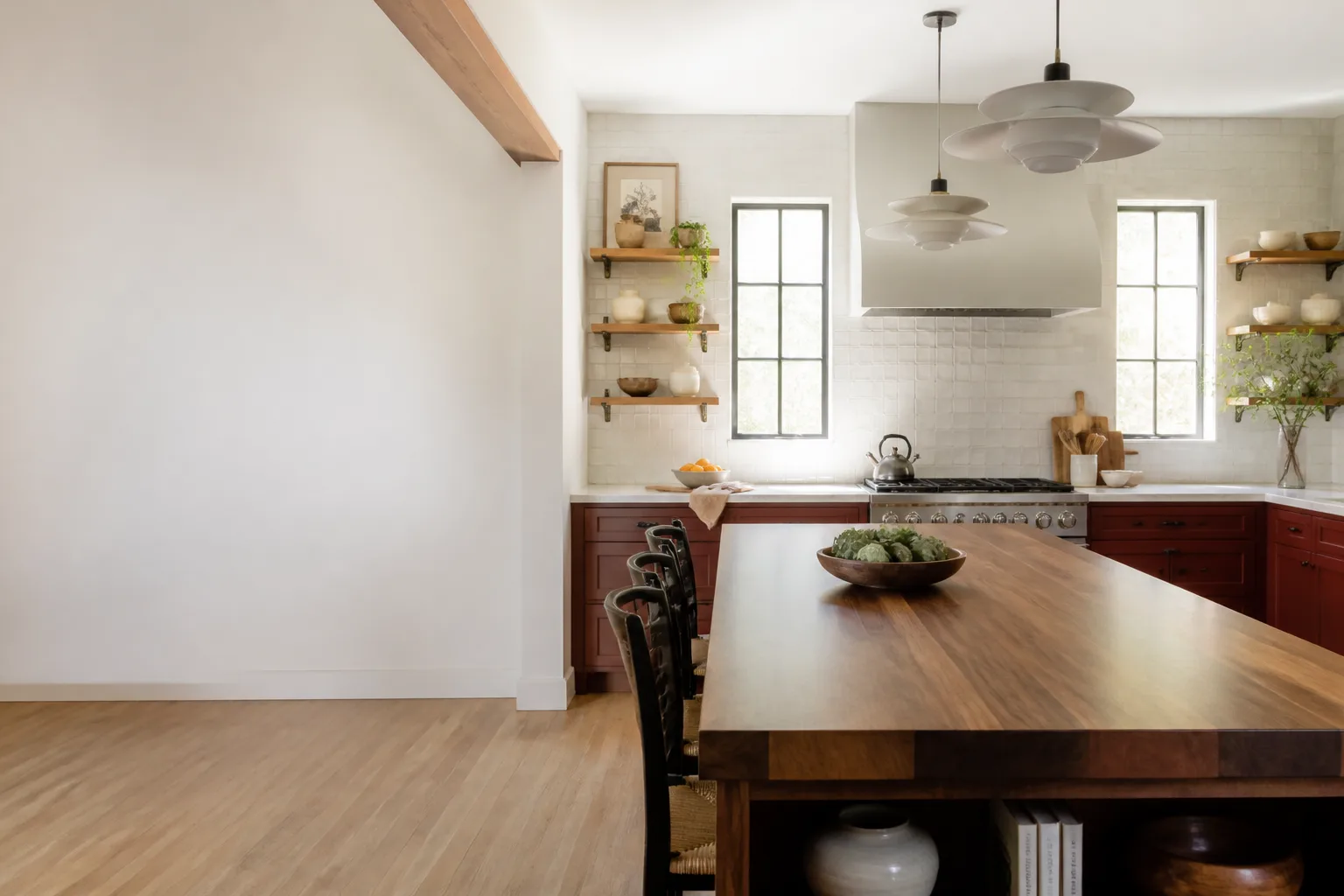
If you own a Silestone countertop in Austin and it’s chipped, cracked, stained through, or pulling away from the cabinetry, a full kitchen remodel around that surface typically runs $14,000 to $45,000 installed. We carry Silestone-compatible materials and install them with written pricing before any work starts. Most Austin homeowners don’t wake up planning a remodel. They find a hairline crack spreading from the sink cutout, or a seam that has opened up after years of slab movement, or a burn mark from a hot pan that won’t buff out. What starts as “we’ll just replace the one slab” usually becomes a bigger conversation about cabinets, sink, faucet, and backsplash, because Silestone color batches change over the years and matching a single slab to existing counters is often harder than starting fresh.
Key Takeaways
- Silestone kitchen remodels in Austin typically cost $14,000 – $45,000 depending on slab count, edge profile, and cabinet work.
- We write the price before we pull anything apart, and it doesn’t change mid-job unless you change the scope.
- Every Silestone project carries our 365-Day Done Right Promise in writing, on top of the product warranty from Cosentino.
- Call (325) 225-5429 for a free in-home look and a written number you can hold us to.
Which Silestone Models This Applies To

Silestone is made by Cosentino, and the product line shifts every few years. Right now in Austin supply houses, the common collections are Eternal, Loft, Sunlit Days, and Urban Crush, though plenty of older kitchens still have slabs from the Stonium Suede or first-gen polished series. The compatibility question matters most when you’re trying to patch one section of counter without redoing the whole kitchen. Silestone’s color-through manufacturing means two slabs with the same name but different batch numbers can show visible variation. If your counter is more than seven or eight years old, that exact color has probably been reformulated or renamed.
Here’s the practical test: look under the front lip of the counter with a flashlight. Many Silestone slabs have a printed identifier sticker or a faint engraved batch code from the fabricator, not from Cosentino itself. If you have the original fabricator’s invoice, even better, it’ll list the slab size, finish (polished, suede, or volcano), and thickness. The thickness matters more than most people think. Older Silestone runs at 3 cm are common. Some newer installs use 1.2 cm over a built-up edge. You can’t always swap one for the other without changing the cabinet reveal or the sink mounting. We check all of that before quoting anything.
On the OEM-versus-aftermarket question: Silestone doesn’t sell “parts” in the way a faucet company does. What you’re really buying is fabrication and installation. That means the aftermarket equivalent is another quartz slab, and we typically recommend sticking with Silestone, Caesarstone, or Cambria if you’re replacing an island and want a clean match. For small fills, a color-matched epoxy from a quartz repair kit works fine. For anything structural, a patch is a band-aid, not a fix.
Styles & brands we work with







Signs Your Silestone Kitchen Remodeling Is Failing
- Cracks radiating from the sink or cooktop cutout. The inside corners of any quartz cutout are stress points. In Austin, slab movement from clay soil shifts the cabinets underneath just enough that a tight cutout becomes a crack starter. Once it spreads beyond an inch, it’s not really repairable.
- Seams that have opened wider than a dime. Quartz seams are always visible, but a gap you can feel with a fingernail means the slab has moved. Austin’s summer heat expands the counter, winter chills contract it, and the seams take the abuse.
- Dull patches or “ghost stains” that won’t come clean. Silestone is non-porous, which puzzles owners when a ring shows up anyway. Usually it’s not the stone soaking in a stain, it’s the polish itself etched by a harsh cleaner. Once the surface sheen is gone, that section grabs light differently and looks permanently dirty.
- A loose or wobbly sink. Undermount sinks are epoxied and clipped to the quartz. When the adhesive fails, you’ll feel the sink shift when you lean on it. Left alone, water gets between the stone and the cabinet box, and the plywood starts to rot.
- Edges chipping along the front lip. Silestone chips when something hard hits a thin edge, usually a cast iron pan. A small chip can be filled. Multiple chips along the same edge suggest the overhang is bearing weight it shouldn’t, and the substrate underneath needs a look.
See the difference
 Before
 After
After Before
 After
After Before
 After
AfterReplacement Cost & What’s Included

A full Silestone kitchen remodel in Austin runs $14,000 to $45,000 installed. If you’re keeping the cabinet boxes and only replacing countertops, expect $2,000 to $6,500 for the fabrication and install on a typical L-shaped kitchen with one island. Add cabinet replacement and you’re into the $9,000 to $20,000 range for a smaller footprint kitchen or $14,000 and up for a full layout change. Those numbers include slab material, templating, fabrication, edge profile, sink cutout, delivery, and installation. They don’t include the sink or faucet unless you want us to supply those, and we’re happy to price Kohler or Moen fixtures in the same written quote so there’s one number to look at.
What drives the price up: moving plumbing, changing the island footprint, waterfall edges, full-height backsplash in Silestone instead of tile, and any cabinet work. What keeps it down: a straightforward slab swap on existing cabinets, a standard eased edge, and a kitchen that doesn’t need electrical or gas moved. Every job gets the same treatment: a written price before work starts, a defined arrival window, and our 365-Day Done Right Promise in writing. If something fails inside that year, we come back and make it right at no charge.
For an exact number on your kitchen, call (325) 225-5429 and we’ll schedule a free in-home look.
DIY or Call Us?
You can safely do some of the investigation yourself. Pull everything off the counters, clean the surface with a pH-neutral cleaner, and look at every seam and edge in daylight. Take photos. Note where the cracks start and stop. That information saves us a trip and helps us quote more accurately over the phone.
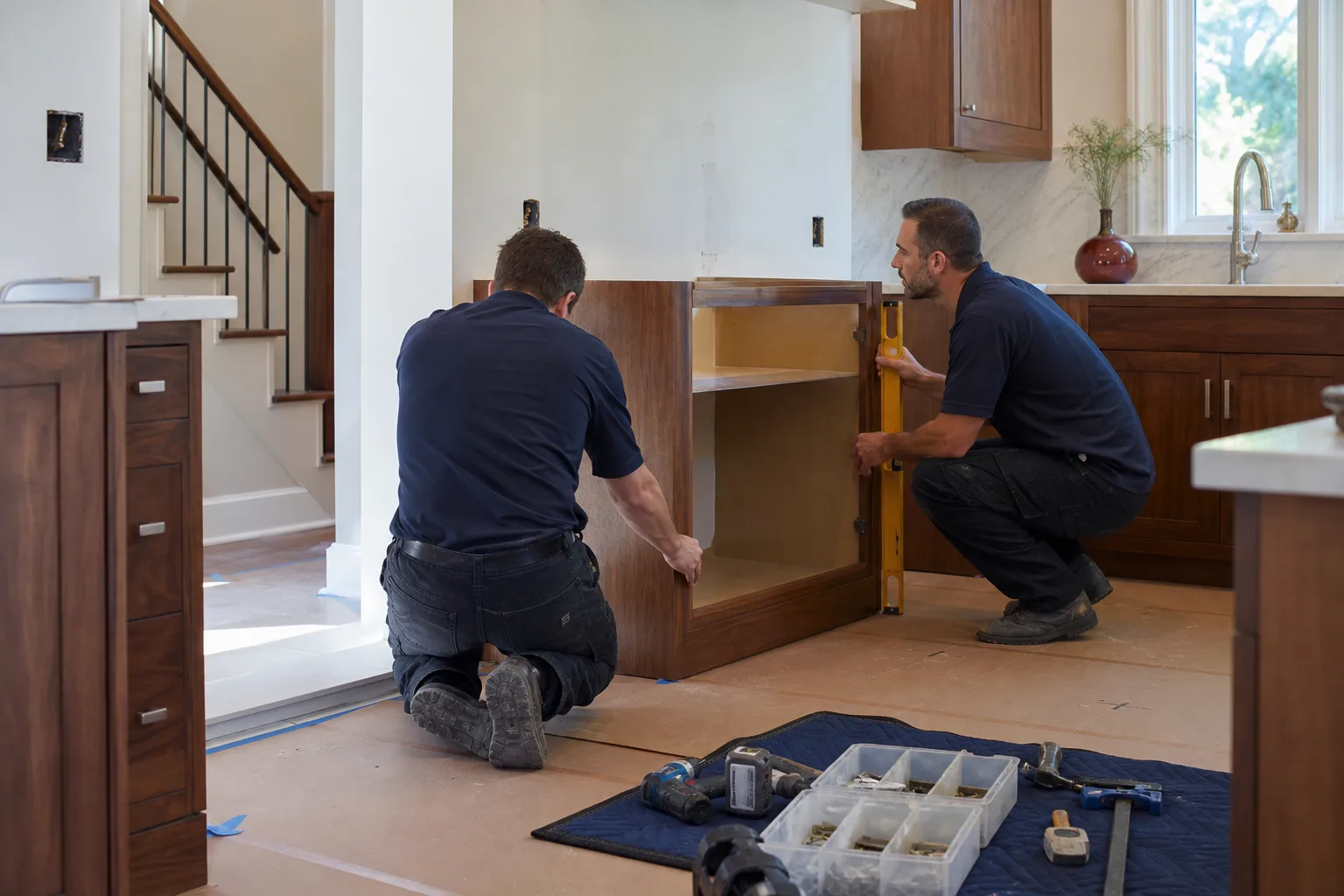
What we don’t recommend is attempting a structural repair on quartz. It’s not like wood or laminate. You can’t sand it smooth, you can’t glue a cracked slab back together with any real strength, and once you apply the wrong epoxy, the professional repair becomes harder and more expensive. Silestone slabs weigh about 20 pounds per square foot, so a 10-foot island section is north of 300 pounds. Lifting, cutting, and setting that material safely takes training, the right suction-cup rig, and a second pair of hands. Our crew is background-checked, uniformed, and does this work every week across Austin. Call (325) 225-5429 and Trevor will walk you through what he sees and what he’d recommend.
FAQs
Silestone quartz typically holds up for 15 to 25 years in Austin, though the harsh Texas sun and heavy air-conditioning swings mean you’ll likely see seam movement or edge wear before the material itself fails. The slab won’t rot or rust, but the installation around it can shift, which is why our 365-Day Done Right Promise covers the full assembly, not just the stone.
Small chips and surface scratches can be filled with color-matched epoxy and polished to near-invisible, but a crack that runs through the slab thickness is permanent. The repair will fail again because the stone has already separated. At that point we talk honestly about whether to replace the single run or step up to a full kitchen remodel.
Most full Silestone kitchen remodels in Austin take two to four weeks from tear-out to final walkthrough. A countertop-only swap on existing cabinets can be done in three to five working days, including templating and fabrication. We give you a defined arrival window before we start and stick to it.
We don’t warehouse full slabs, but we order directly from Austin-area Silestone distribution partners and can usually pull your slab within a few days of signed approval. We also work with KraftMaid, Cambria, and Kohler for the surrounding kitchen elements, so the whole project moves through one written quote and one schedule. Call (325) 225-5429 and we’ll check current slab availability for the color you’re after.
Written by Trevor Nash, Owner, Penhallow Remodeling Austin at Penhallow Remodeling Austin, serving Austin and nearby areas.


