








Free written scope consultation - allowances, timeline, and change-order rules on paper before a single trade is scheduled
Silestone Home Additions & ADU: The Austin Owner’s Guide
If you’re planning a home addition or ADU in Austin and want Silestone countertops in the new space, you’re looking at a total project cost of $45,000 to $130,000 for the addition itself, with Silestone countertop installation running $2,000 to $6,500 depending on slab size and edge profile. We stock and install Silestone-compatible materials for kitchenettes, wet bars, bathroom vanities, and laundry surfaces inside additions and ADUs across Austin, and we can usually have your Silestone measured, templated, and cut within two to three weeks of sheetrock finishing.
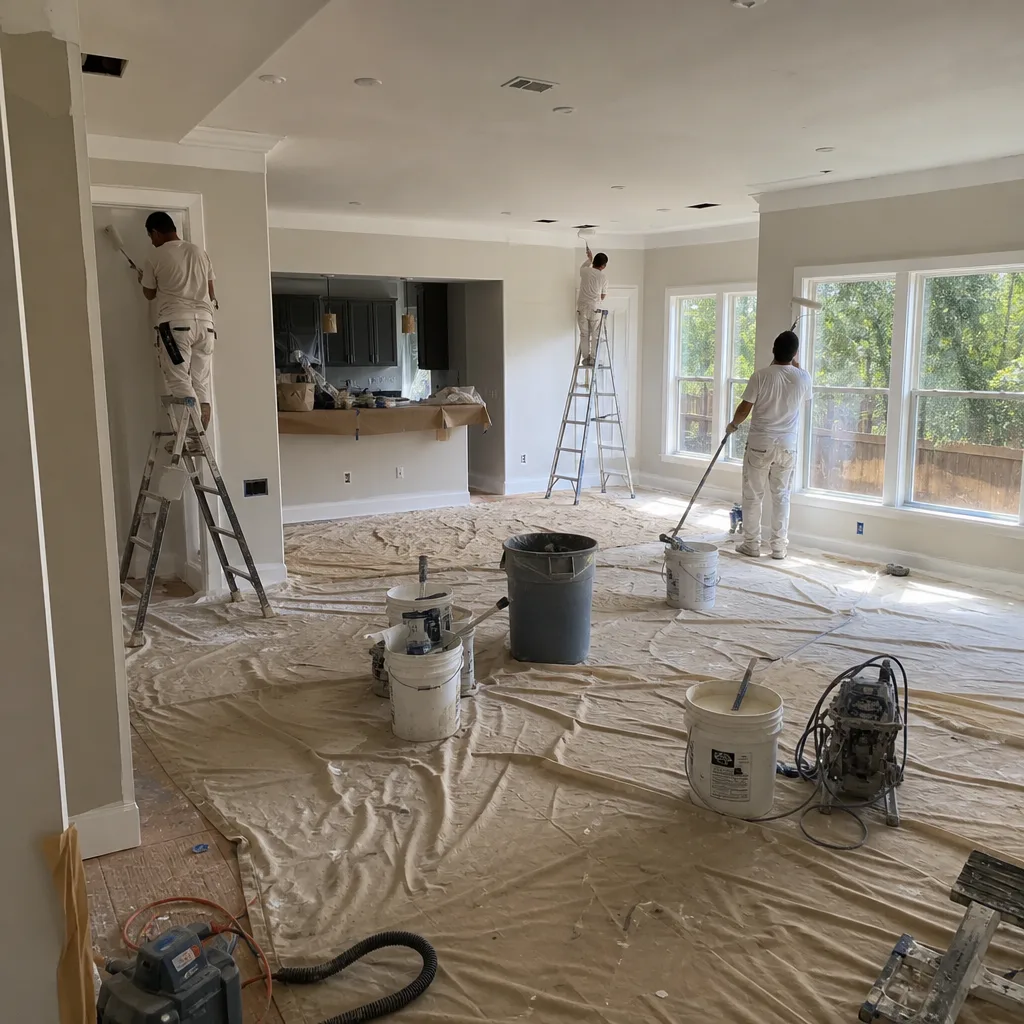
Most Austin homeowners call us after they’ve already started their ADU or addition with another contractor and hit a wall: the countertop supplier won’t template until cabinets are perfectly level, or the Silestone slab they ordered arrived with a seam that lands in the wrong place. Sometimes the issue is simpler, a cracked edge from a dropped tool during framing, or a Silestone sink cutout that was templated for the wrong faucet spread. Whatever the failure point, you need a crew that knows how Silestone behaves during fabrication and install, not a general handyman guessing at it. Here’s the short version of how we approach it: if the Silestone is going into a home addition or ADU, we want the countertop decision made before the rough-in inspection, not after the backsplash is up. That sequencing saves you money and keeps your project from stalling.
Key takeaways:
- Silestone in a new ADU or addition costs $2,000 – $6,500 installed per surface, depending on slab size, edge detail, and whether it’s a kitchenette or a bathroom vanity.
- We’re an independent Austin remodeler, not affiliated with Silestone, but we work with Silestone slabs daily and source directly from recognized trade suppliers.
- The most common failure point in ADU Silestone work is a bad template measurement, especially on L-shaped counters and odd-angle walls common in Austin garage conversions.
- We write a fixed price before cutting anything, and the number doesn’t change at the door.
Which Silestone Models This Applies To

Silestone is a quartz product made by Cosentino, and it comes in multiple series: the standard Silestone collection, Silestone Loft, Silestone Urban Crush, and the newer Silestone XM line with different veining patterns and textures. The slab itself isn’t the variable when you’re adding onto a home. The compatibility question is about fabrication profile, edge treatment, thickness, and whether the slab you pick can span the length of your island or peninsula without a seam.
Here’s the compatibility gotcha most Austin homeowners don’t learn until it’s too late: Silestone slabs come in two standard thicknesses, 2 cm and 3 cm, and the thickness determines whether you need a plywood underlayment or can set the counter directly on the cabinet bases. On a home addition with a big kitchen island, that decision changes the cabinet height math by a full half-inch, and if the cabinet installer set the boxes before anyone picked a slab thickness, you’re fixing it with shims or reordering. We’ve seen this happen in the North Loop and Crestview neighborhoods where garage conversions have tight ceiling clearances and every fraction of an inch matters.
For OEM versus aftermarket: there’s no such thing as an “OEM Silestone part” in the way there is for appliances. Silestone is a slab material, and the parts involved are the sink, the faucet, and the edge profile. What matters is whether the fabricator knows the Silestone-specific cut-and-polish tolerances. Cosentino specifies a minimum 1.5-inch interior radius on inside corners and requires a 3 mm radius on all exposed edges. A rushed fabricator cutting tight square corners will create a stress riser, and that corner cracks inside six months. We’ve corrected that exact issue on a Silestone island top in Mueller that cracked at a 90-degree inside corner.
We also work with KraftMaid, Cambria, and Kohler products in the same additions, so if your ADU plan includes a Cambria vanity top or a Kohler undermount sink paired with a Silestone kitchenette counter, we can coordinate all of it under one fixed price.
Styles & brands we work with







Signs Your Silestone Home Additions & ADU Is Failing
- Cracks radiating from a corner or sink cutout. Inside corners under stress from settlement or a too-tight cut will crack outward from the weakest point. In Austin, clay soils expand and contract with drought and rain cycles, and that movement telegraphs through slab-on-grade ADU floors into the base cabinets and up into a Silestone top that has no flex.
- A seam you can catch with a fingernail. Quartz seams should be nearly flush and filled with a color-matched resin. If you can feel the seam, the installer didn’t pull it tight during set, and that’s a point where water, coffee, and Austin’s hard mineral tap water will work their way in and stain the edge permanently.
- Water pooling behind the faucet or around an undermount sink. Silestone is non-porous, but the seam between the slab and a sink flange is silicone, and silicone fails. When it does, water wicks into the cabinet below and rots the particleboard over a few Austin summers.
- The slab sits visibly off-level. Put a laser or a long level across the counter. Any slope greater than 1/8 inch over 4 feet means the cabinet substrate moved or was set wrong. Liquid pools, glasses tip, and the counter reads wrong the second you walk in.
- Chipped edges on a newly installed top. A 3 mm eased edge on Silestone should withstand daily use. If chips appear within the first year, the edge was over-polished during fabrication and the resin binder has been cut too thin near the shoulder.
None of these are cosmetic-only problems. A cracked Silestone top in an ADU is a structural failure waiting to drop a corner onto a tile floor or worse, onto a cooktop. If you’re seeing any of these, that’s the point where we tell people not to ignore it and not to try a DIY epoxy fill that won’t match the Silestone finish.
See the difference
 Before
 After
After Before
 After
After Before
 After
AfterReplacement Cost & What’s Included

For a Silestone countertop in a home addition or ADU in Austin, here’s what you should expect to pay:
- Bathroom vanity Silestone top, 25 – 40 square feet: $2,000 – $3,500 installed
- Kitchenette or wet bar Silestone top, 40 – 60 square feet: $3,000 – $5,000 installed
- Full ADU kitchen Silestone counter with island, 60 – 100 square feet: $4,500 – $6,500 installed
- Full home addition with kitchen remodel including Silestone counters: $45,000 – $130,000 total project cost
The Silestone piece of the number is driven by slab square footage, edge profile (eased is standard and included; waterfall edges and mitered builds add cost), sink cutouts, and whether the slab needs a plywood substrate added. We separate the material line and labor line on every written estimate, so you can see exactly what the slab costs and exactly what our crew’s time costs. There’s no change order on the back end. The price you approve before templating is the price on the invoice.
Every Silestone installation we do in an Austin addition or ADU carries the 365-Day Done Right Promise. If the seam separates, the edge chips, or the sink flange leaks inside a year, we come back and fix it at no charge. That’s written into the estimate, not something you have to ask for.
DIY or Call Us?
What you can safely check yourself: run your hand across every seam, shine a flashlight across the slab at a low angle to spot lippage, and run water around the sink to watch for wicking. Checking is free and it tells you whether you have a failure or a maintenance issue.
What you should not do is attempt to cut, polish, or re-seat a Silestone slab. Quartz is a hard engineered stone, and a diamond blade in the wrong hands turns a $2,000 slab into a $6,000 replacement. Removing and re-setting a Silestone counter also means working with a slab that weighs 180 to 220 pounds per 8-foot section, and a dropped corner will break toe-kicks, cabinet frames, floor tile, and bones. If your addition or ADU counter has failed, the fix is not a weekend project.
Tell me what you need, I’ll tell you what it costs, and we’ll go from there. That’s been the approach since we started doing Austin additions, and it’s the one I still use with every homeowner we quote. Call (325) 225-5429 and we’ll send someone out to look at the slab, take measurements, and give you a written number before anything gets ordered.
FAQs
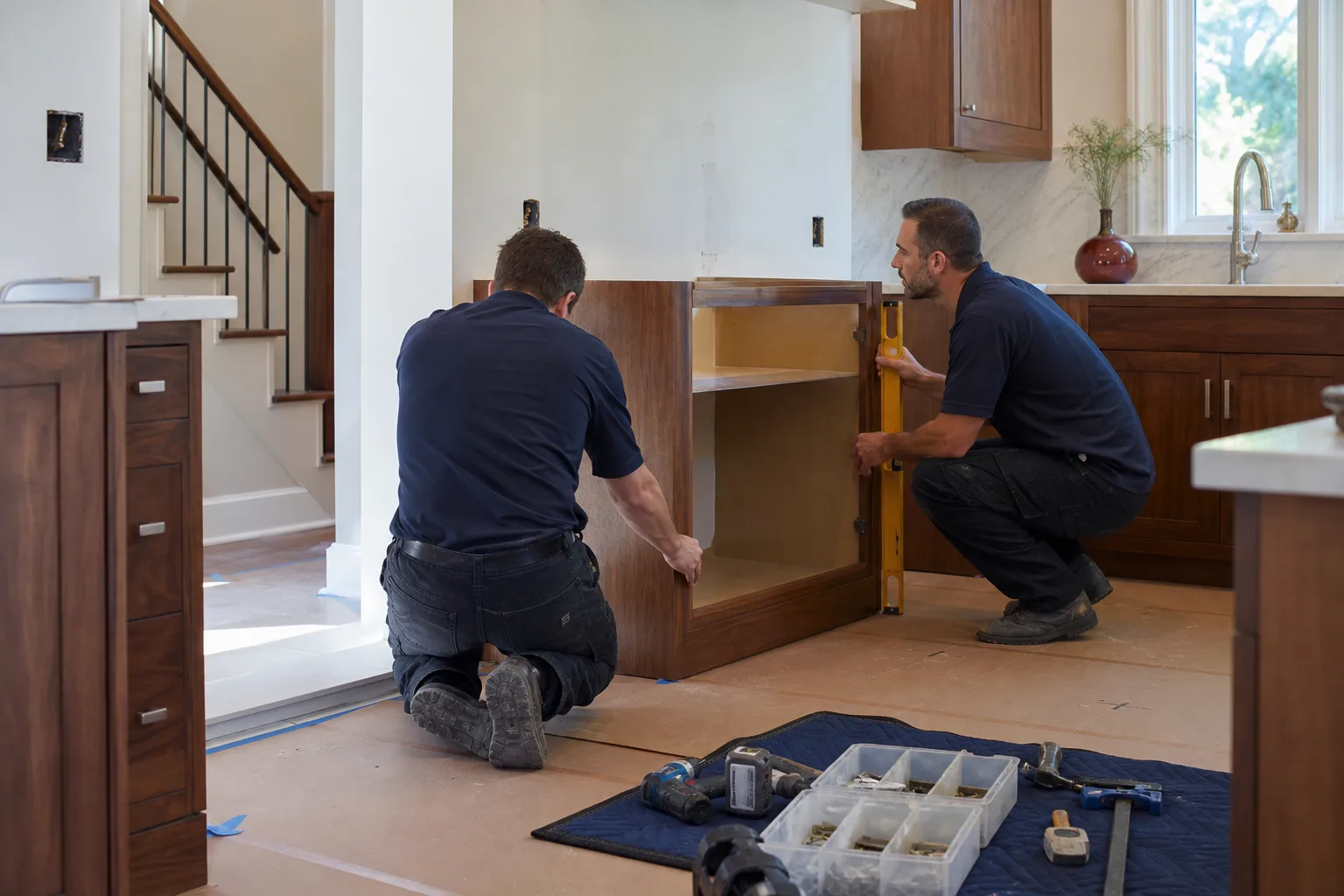
A properly fabricated and installed Silestone countertop should last 20 to 25 years in a climate-controlled Austin home, and longer than that with normal care. The failure points in additions are almost never the quartz itself; they’re the seams, the sink flanges, and the substrate shifting under Austin’s clay soil. A good install removes those variables.
Small edge chips can sometimes be resin-filled by a fabricator, but a structural crack that runs through the slab cannot be reliably repaired. Quartz doesn’t have the flex or porous grain of natural stone, so a crack will continue to travel, and the repair will always read as a visible line. For a kitchenette or wet bar, replacement of a single slab section is often cheaper than you’d expect. Call (325) 225-5429 and we’ll give you an honest answer after looking at the crack.
From template to installed top, the typical window is two to three weeks. Template day takes about an hour on site. Fabrication runs 7 to 10 days at the supplier. Demolition of the old top, substrate prep if needed, and the new Silestone set is usually a single day in an ADU kitchenette or bathroom. Full kitchens with islands run two days.
We don’t warehouse slabs; quartz slab selection changes too quickly for that. We order your specific Silestone color and lot from recognized Austin suppliers after you approve the written estimate, and we inspect the slab at the yard before it’s cut. The lead time is the same two to three weeks regardless of which Silestone series you pick. If your ADU timeline is tight, call (325) 225-5429 and we’ll tell you which colors are in stock this week.
Written by Trevor Nash, Owner, Penhallow Remodeling Austin at Penhallow Remodeling Austin, serving Austin and nearby areas.


