







Free written scope consultation - allowances, timeline, and change-order rules on paper before a single trade is scheduled
KraftMaid Kitchen Remodeling: The Austin Owner’s Guide
KraftMaid kitchen remodeling in Austin typically runs $14,000 to $45,000 depending on cabinet line, layout changes, and countertop material. We stock and install KraftMaid-compatible cabinetry, drawer hardware, hinges, door fronts, and trim, and most hinge or drawer-glide swaps happen the same day we arrive. The way you usually find out something failed is small: a drawer that suddenly drags, a door that won’t close flush against the frame, or a soft-close mechanism that stopped soft-closing sometime in the last Texas summer.
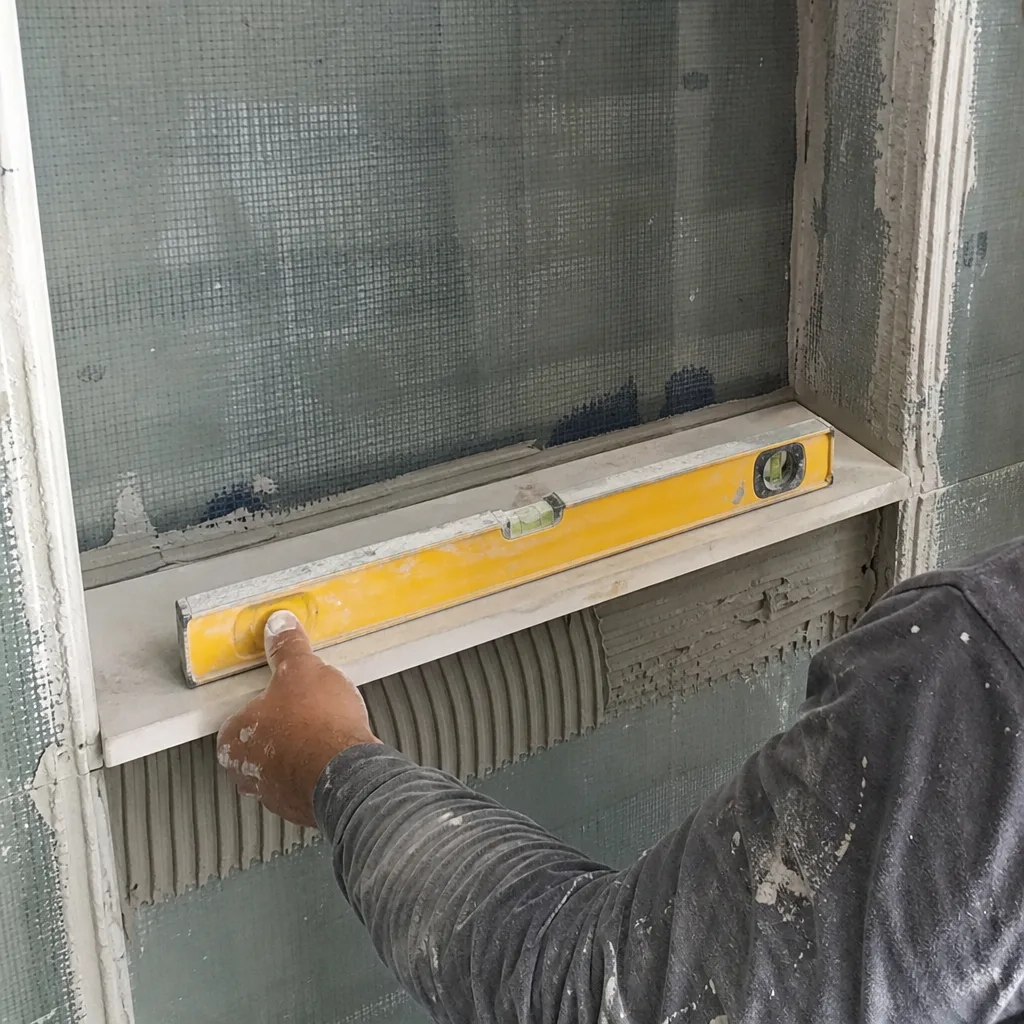
We’re an independent Austin remodeling contractor, not affiliated with KraftMaid. That matters because we’re not tied to a showroom’s install schedule. We carry the replacement hardware and cabinetry hardware that matches most KraftMaid lines built in the last 20 years, and when a part is discontinued, we tell you exactly what your options are, including quality aftermarket equivalents that fit the original bore pattern.
Which KraftMaid Models This Applies To

KraftMaid has run several cabinet lines over the years, and most Austin homes we work on fall into one of three groups: the classic all-plywood construction, the mid-tier semi-custom line, and the newer soft-close and frameless configurations sold through big-box kitchen departments in the last decade. The compatibility gotcha is the hinge bore pattern. KraftMaid doors are drilled for a 35mm cup hinge, but the mounting plate spacing changed between older face-frame lines and newer frameless lines. If you buy a hinge that matches the cup but not the plate spacing, the door will hang crooked and bind against the adjacent door.
The best way to identify your KraftMaid part is to pull a hinge or drawer glide off and look for a stamped model number on the metal itself. Many KraftMaid cabinets also have a manufacturer label inside the sink base or the top drawer of a lower cabinet. That label lists the line name and a production date, which narrows down whether you need the OEM part or a Mathews, Salice, or Blum-compatible equivalent. In most cases the aftermarket option is functionally identical and costs half the OEM price. The exception is door fronts and cabinet boxes themselves. Those are made-to-match, and we order the exact door style and finish from KraftMaid so the new piece blends with the existing grain pattern and glaze.
Styles & brands we work with







Signs Your KraftMaid Kitchen Remodeling Is Failing
- Drawer glides that catch or grind. The ball bearings in the glide wear out, especially in Austin’s dry, dusty conditions. Dust gets into the track, and the glide stops rolling smoothly. You’ll feel a hitch halfway through the pull, then a thunk when the drawer drops.
- Door hinges that sag or won’t hold alignment. The hinge’s internal spring weakens, or the mounting screws strip out of the cabinet frame. The door starts rubbing the frame on the bottom corner, which wears the finish off over time.
- Soft-close mechanisms that slam. The hydraulic damper inside the hinge or glide loses its fluid, usually after six to ten years of daily use. The drawer still slides, but it hits the cabinet with a sharp crack instead of easing shut.
- Cabinet boxes separating from the wall. This is the serious one. Austin’s clay soil expands and contracts with moisture, and older homes near South Congress and Travis Heights settle more than newer slab foundations in Cedar Park or Leander. The cabinet pulls away from the wall, and you’ll see a gap open at the top of the crown molding.
- Warped or water-swollen door fronts near the sink or dishwasher. Even with a good range hood, the humidity around a dishwasher vent or under-mount sink breaks down the finish and swells the door core. The door will be fine everywhere except the bottom two inches.
See the difference
 Before
 After
After Before
 After
After Before
 After
AfterReplacement Cost & What’s Included

When a KraftMaid part fails, the fix is either a hardware swap or a cabinet-level repair. Here is what those run in Austin:
- Hinge or drawer glide replacement: $25 to $75 per unit installed, including the part and the labor. Most kitchens need six to twelve hinges done at once.
- Door front replacement: $120 to $400 per door depending on size, wood species, and whether it’s a flat panel or raised panel. The finish work is included in the price.
- Full cabinet box repair or rebuild: $400 to $1,200 per cabinet, which covers removing the box, repairing the substrate (the structural panel behind the finish), re-leveling, and re-hanging.
- Complete kitchen remodel with KraftMaid cabinetry: $14,000 to $45,000 in Austin. The number moves based on how many cabinets you replace, whether you’re changing the layout, and whether the countertops go with them.
Every hardware replacement and cabinet repair we do includes a written price before we start and a written guarantee on the work. If a replacement glide or hinge fails inside the 365-day window, we come back and fix it at no charge, no service call, no re-inspection fee. The warranty is in writing, not verbal. That is the standard we’ve run by since day one.
DIY or Call Us?
Some KraftMaid fixes are genuinely simple. If a drawer glide is dirty, you can pull the drawer out, wipe the track, and coat the bearing with a light silicone spray. If a hinge screw has stripped out of the cabinet frame, you can fill the hole with a dowel and re-set the screw. Those are fair homeowner jobs, and we tell people to try them first.
What goes wrong is when the drawer face or door has to come off, or when the cabinet box itself has separated from the wall. KraftMaid doors are set on a specific hinge cup depth, and if you drill a new cup without the right jig, you’ll blow through the door face and need a new door. The same caution applies to any cabinet that has pulled away from the wall, because the weight of a loaded cabinet is a safety issue. Call (325) 225-5429 and we’ll send someone to look. The estimate is free.
FAQs
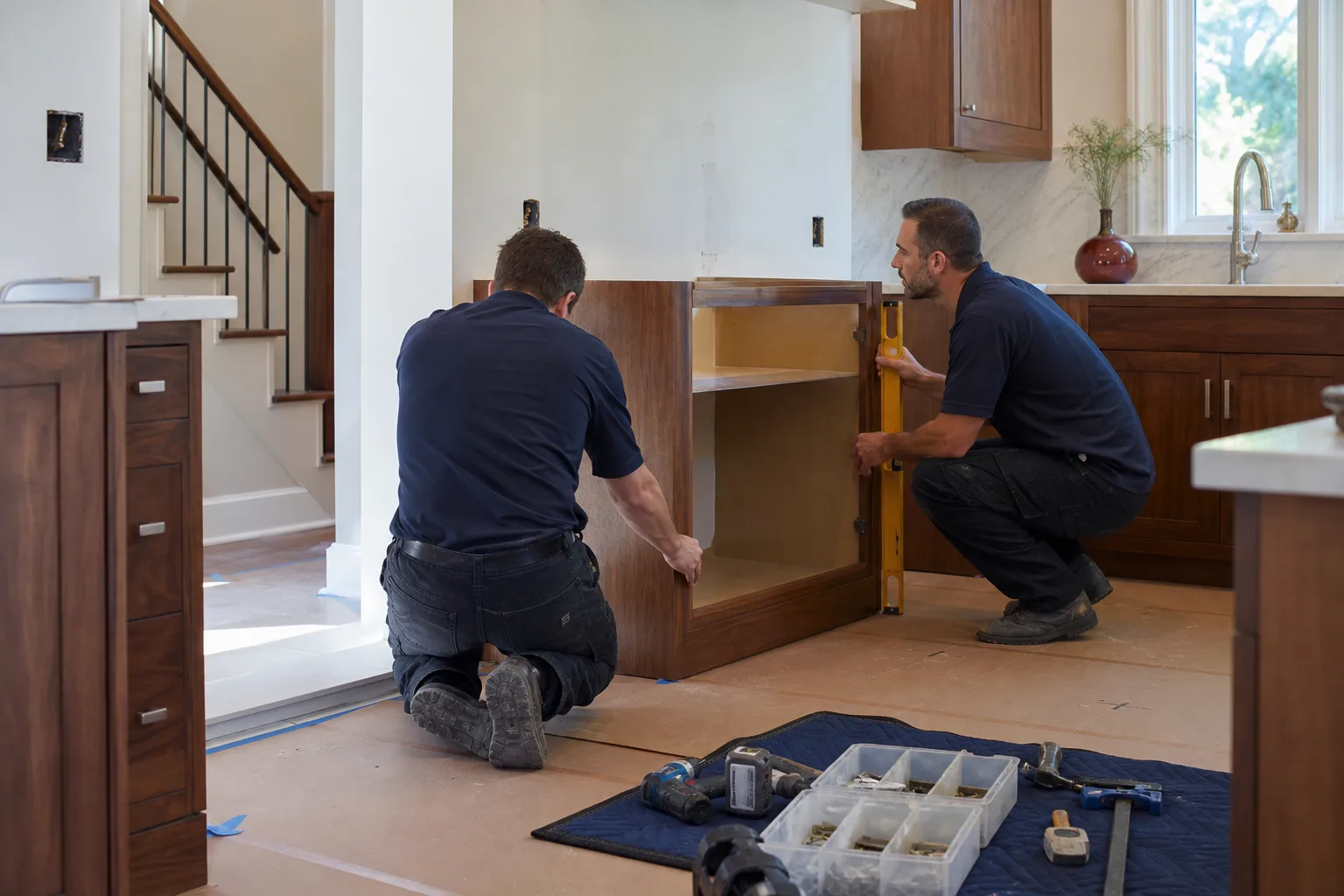
KraftMaid cabinets typically last 20 to 30 years in Austin homes when they are not exposed to standing water or unvented humidity. The cabinet boxes hold up well, but hinges and drawer glides usually fail first, around years 8 to 15. Austin’s dry, dusty climate wears out the bearing surfaces faster than humid coastal climates do. Call (325) 225-5429 and we’ll tell you what’s worth replacing versus what’s still got life in it.
Yes, if the failure is a hinge cup that came loose, a stripped screw hole, or a finish crack along the stile edge, that is repairable. If the door core is swollen from water, the repair is usually a replacement. Swelling means the substrate inside the door has absorbed moisture, and no sanding or re-finishing will reverse that. We’ll give you an honest call on which is which, and the price either way before work starts.
Most hinge and drawer glide replacements take two to four hours for a standard kitchen with ten to fifteen drawers and doors. We carry common KraftMaid hinge spacings and glide lengths on the truck, so there is no second visit for parts unless the line is discontinued and the hardware has to be matched by measurement. You’ll get a written price before we pull the first screw.
We stock the failure-prone hardware: 35mm cup hinges in the two most common KraftMaid plate spacings, full-extension ball-bearing glides in 18-inch, 21-inch, and 24-inch lengths, and soft-close dampers that fit both the hinge and glide mounts. Door fronts and cabinet boxes are special-ordered from KraftMaid with the matching style and finish. We also keep parts for Cambria, Silestone, and Kohler installations when the job starts at the countertop or sink. Call (325) 225-5429 and we’ll confirm we have what you need on hand.
Written by Trevor Nash, Owner, Penhallow Remodeling Austin at Penhallow Remodeling Austin, serving Austin and nearby areas.


