






Free written scope consultation - allowances, timeline, and change-order rules on paper before a single trade is scheduled
Grohe Home Additions & ADU: The Austin Owner’s Guide
If you’re planning a home addition or ADU in Austin and want Grohe fixtures throughout, we can help you get the right parts spec’d, ordered, and installed as part of the build. A full home addition in Austin typically runs $45,000 – $130,000, with ADUs landing between $90,000 and $220,000 depending on square footage, foundation work, and finish level. The Grohe components themselves (valves, trims, shower systems, and faucets) are usually a small line item in that bigger number, but getting the right valve body in the wall before the tile goes up is the difference between a smooth finish and a very expensive fix later.
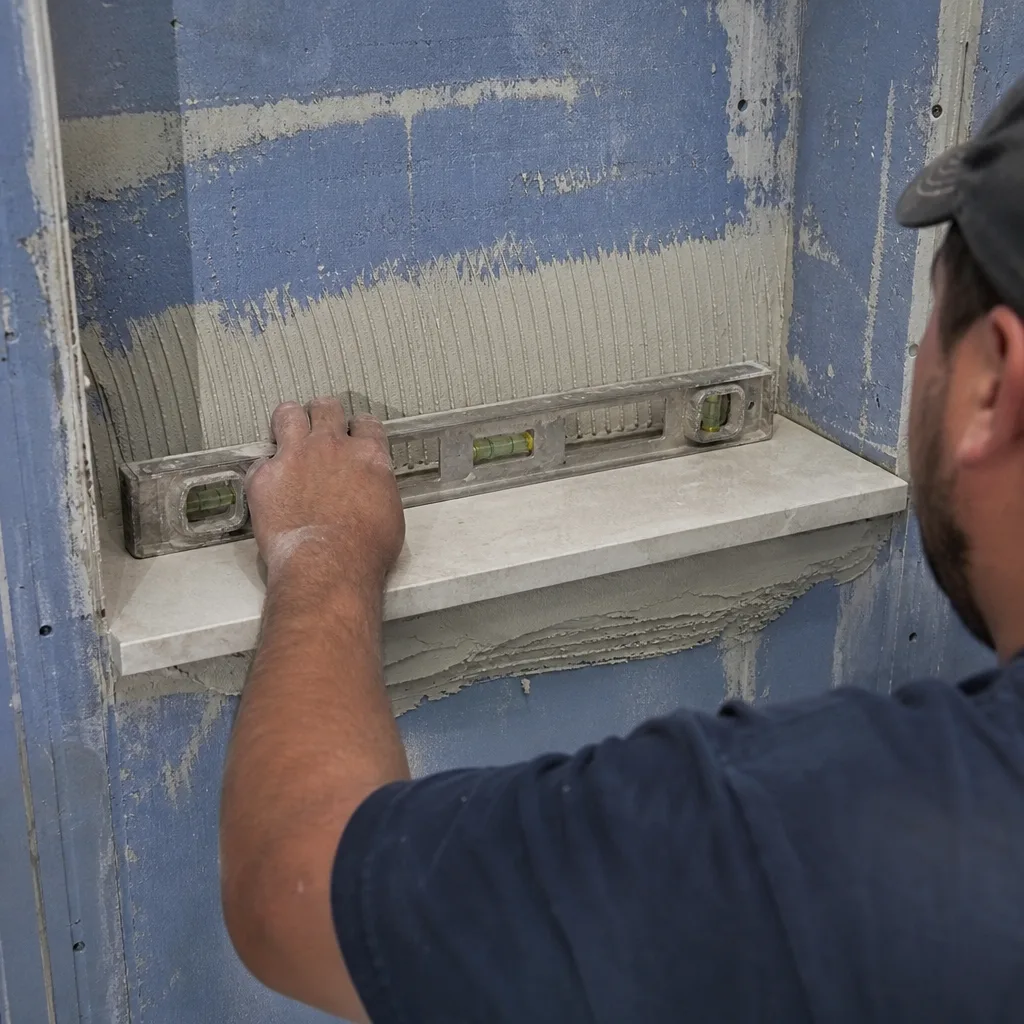
Most Austin homeowners land on this page because they’re mid-project or mid-renovation and realized their Grohe part doesn’t match the rough-in already behind the drywall. A plumber roughed it in years ago, or the previous owner bought a trim kit that never got installed. The wall is open now, the tile is scheduled, and somebody needs to tell them whether the part they ordered will actually work. That’s the conversation we have on the phone and in person, and we’d rather have it before the tile crew shows up.
Which Grohe Models This Applies To
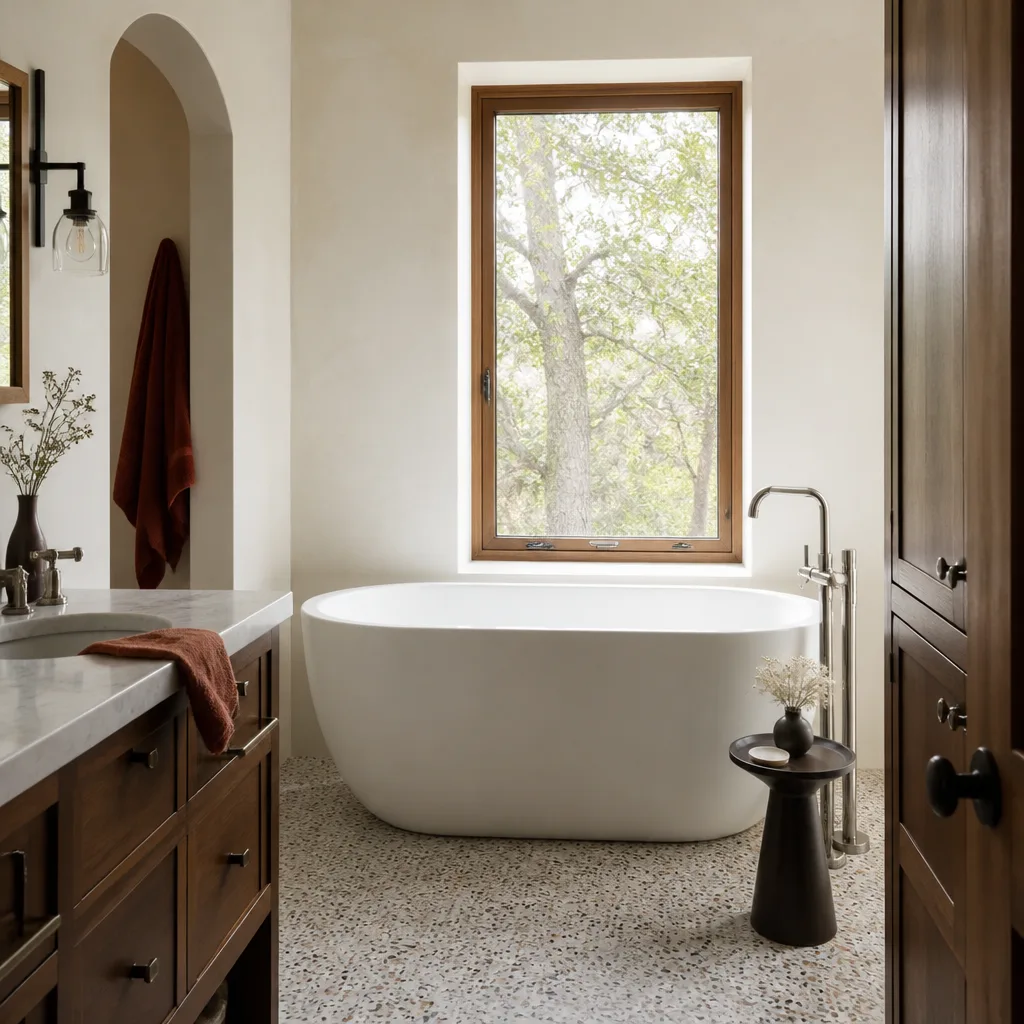
The short answer: if your addition or ADU is getting a Grohe shower, tub filler, or wall-mount faucet, the part you need is determined by the rough-in valve, not the trim kit. Grohe builds trims and valves as a system, and not every trim fits every valve. This is the compatibility gotcha that catches Austin homeowners more than any other.
Here’s the practical version. Grohe’s current rough-in valves include the GrohFlex Universal Rough-in Box (model 35015000 and related), the Rapido SmartBox for thermostatic shower systems, and older Grohmix valve bodies still present in homes built before roughly 2015. A Grohe Euphoria shower system trim, for example, requires a GrohFlex or Rapido valve behind it. An older Grohmix body won’t accept a new Euphoria trim without swapping the valve, which means opening the wall. If the wall is already open because you’re building an ADU or adding a bathroom, that’s a five-minute conversation. If the wall is finished, it changes the labor entirely. We always recommend matching the trim to the rough-in before any plumbing inspection.
On the OEM-versus-aftermarket question: for Grohe specifically, we stock OEM Grohe cartridges, trim screws, and handle assemblies. Grohe cartridges are ceramic-disc and tightly toleranced; aftermarket replacements tend to have slightly off dimpling on the stem or a stiffer rotation that customers notice immediately. For cartridges, OEM is the call. For things like shower arm flanges or escutcheons (the decorative wall plate), a good aftermarket part is usually fine and costs less. We’ll tell you which is which without making you guess.
Penhallow Remodeling Austin is an independent remodeling company, not affiliated with Grohe. We install and service Grohe products because they’re a solid fixture line, and we keep the common parts on the truck for the Austin jobs we’re already running.
Styles & brands we work with







Signs Your Grohe Home Additions & ADU Is Failing
If you’re researching whether the Grohe part in your existing Austin home needs replacing before you expand, here’s what we typically see. Each of these has a specific cause, and none of them fix themselves.
- Drips from the tub spout or shower head after the water is off. The ceramic cartridge inside the valve has a hairline crack or mineral scoring on the disc surface. Austin’s hard water accelerates this; the limestone in the Hill Country comes straight through the tap. A new cartridge fixes it.
- Handle turns with a grind or catches mid-rotation. Often this is the cartridge stem wearing against the trim adapter, made worse by scale buildup. If you force the handle, you can shear the stem and then the handle spins freely without changing water temperature at all.
- Water temperature spikes or drops while a toilet flushes or a sink runs elsewhere in the house. On a Grohe thermostatic valve, this means the thermostatic element is going. On a pressure-balance setup, the balancing spool is stuck. Both are serviceable parts, but a thermostatic element is a pricier fix.
- Water leaking from behind the trim plate, not the spout. The mixing valve’s internal o-rings or the distribution seals have failed. Left alone, this leaks into the wall cavity. In an Austin frame home with drywall, that means mold inside the wall long before you see a stain.
- Reduced flow from a Grohe shower head that used to feel strong. The flow restrictor screen embedded in the shower head fitting has clogged with mineral deposit. In most Austin zip codes, you’ll see this within five to seven years of regular use. The fix is a new screen or a new shower head, not a plumbing re-pipe.
See the difference
 Before
 After
After Before
 After
After Before
 After
AfterReplacement Cost & What’s Included
For the Grohe-specific work inside a home addition or ADU build in Austin, here’s what you can expect as line items rather than a single vague number. A Grohe cartridge replacement on an existing valve typically runs $165 – $325 including the OEM cartridge and labor. A full trim kit swap (new handle, escutcheon, shower head, and tub spout) usually lands at $275 – $650 depending on finish and whether we’re also changing the valve. A complete valve replacement inside an open wall, which is the common situation during a home addition or ADU rough-in, runs $400 – $900 in parts and plumbing labor before drywall and tile.
If the Grohe work is part of the larger addition, that number folds into the full $45,000 – $130,000 project scope. What drives the range on the bigger picture: square footage, whether you’re building on a slab or pier-and-beam foundation, electrical service upgrades, and the finish level of the bathroom or kitchen where the Grohe fixtures live. A guest suite ADU with a single Grohe shower is a different number than a two-bath addition with a freestanding tub filler and a multi-head shower system.
Every job gets a written price before any work starts. The number on the quote is the number on the invoice. If the new Grohe part fails inside a year, we come back and fix it at no charge under our 365-Day Done Right Promise. That’s in writing, on every project.
DIY or Call Us?
For a Grohe cartridge or trim swap on an existing fixture, some Austin homeowners do it themselves, and that’s fine. You kill the water at the stop, pop the handle, pull the cartridge, and replace it with the matching OEM part. If you know which valve body is behind the wall and have the right cartridge in hand, it’s a 20-minute job on a good day. We won’t tell you not to.
What goes wrong is the rough-in stage. Setting a GrohFlex or Rapido rough-in during a home addition or ADU build means getting the depth exactly right relative to finished drywall and tile. Set it too deep and the trim won’t seat. Too shallow and you’re shimming the escutcheon and it looks wrong forever. Get the hot and cold ports reversed and the thermostatic valve won’t function, or worse, you’ll scald someone on the first shower. This is the part we’d rather do before your tile contractor sets the wall. It’s not a scare tactic; it’s just that the valve body is the one part you can’t fix from the front once the tile is up.
Call (325) 225-5429 if you’re mid-build and need a Grohe valve set, spec’d, and installed before inspection. We’ll give you a written number and a real arrival window.
FAQs
In Austin’s hard water, a Grohe ceramic cartridge typically lasts 8 – 12 years before mineral scoring causes drips or stiffness. Homes with a water softener can see 15-plus years. If yours failed sooner, the problem is likely sediment from construction or a water heater flush that sent debris through the line.
Yes, in most cases the cartridge, thermostatic element, or balancing spool is the failed part and the valve body itself is fine. We always repair first when the wall is finished. If the wall is open during a home addition or ADU build, a new valve is sometimes the smarter spend, since labor is already at zero. Call (325) 225-5429 and we’ll walk through what you have.
A cartridge swap on an existing fixture takes 20 – 45 minutes once we’re at the home. A full valve replacement during a rough-in takes two to four hours including pressure testing. If the tile is already up and we have to open the wall, that’s a separate conversation and a different scope. We’ll tell you straight before any work starts.
We keep common Grohe cartridges, balancing spools, and trim adapters on the truck for the jobs we’re already running across Austin. For less common valve bodies or specific finishes, we order OEM parts and typically see them within a few business days. We also stock parts for KraftMaid, Cambria, and Silestone on the cabinetry and countertop side, since those brands come up constantly on Austin remodels. Tell me what you need, I’ll tell you what it costs, and we’ll go from there.
Written by Trevor Nash, Owner, Penhallow Remodeling Austin at Penhallow Remodeling Austin, serving Austin and nearby areas.


