






Free written scope consultation - allowances, timeline, and change-order rules on paper before a single trade is scheduled
American Standard Home Additions & ADU: The Austin Owner’s Guide
We install American Standard-compatible home additions and ADUs across Austin, with full projects typically running $45,000 – $130,000 for an addition and $90,000 – $220,000 for a detached ADU. Most homeowners call us after living with a space that stopped working for them, not because a single part failed overnight. What surprises people is how often the failure traces back to a few specific points: the connection where new framing meets the old roofline, the water barrier detail at the foundation, or an undersized HVAC run that never kept the new space comfortable. If you’re staring at a settling corner, a door that won’t close square, or drywall cracking along the ceiling seam six months after someone else finished the job, that’s not normal settlement. That’s a failed integration, and it’s exactly the kind of thing we fix before we build on top of it.
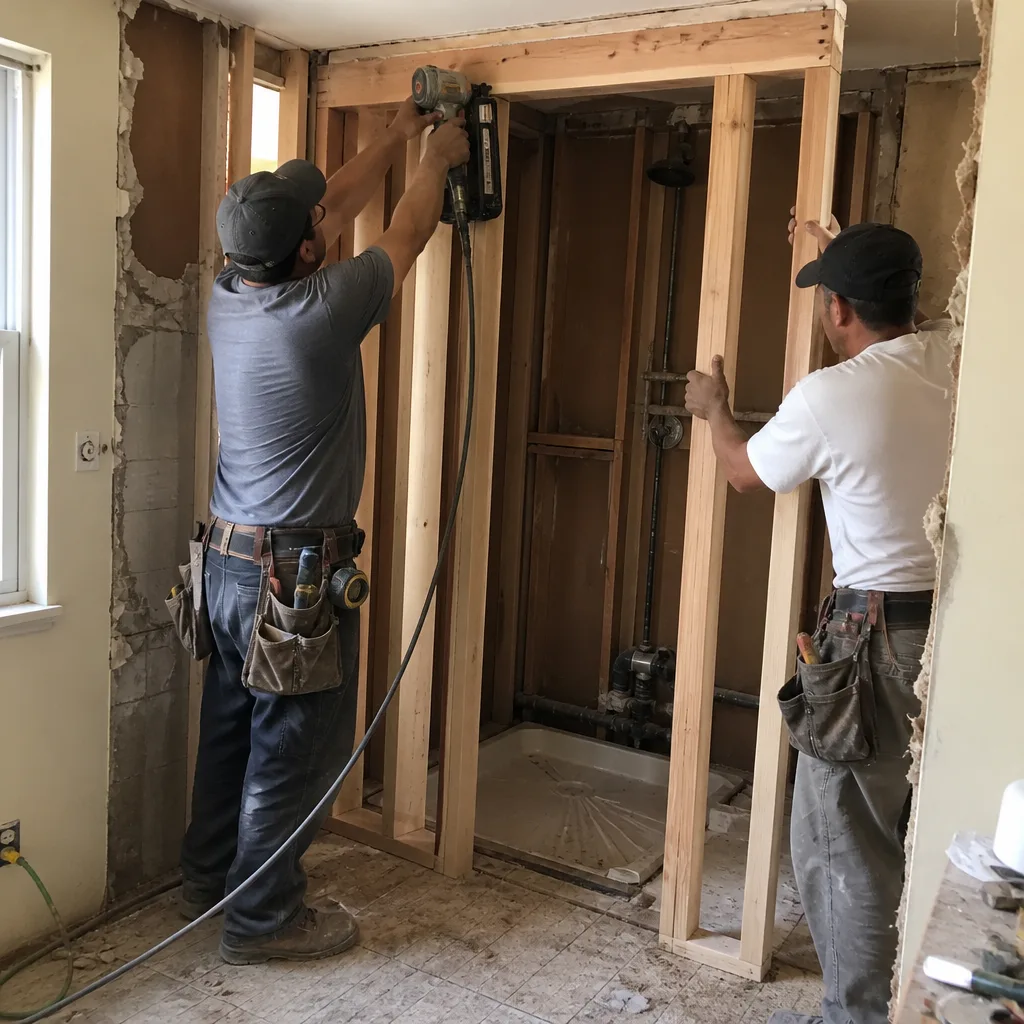
The honest opener: Penhallow Remodeling in Austin handles the parts of an addition that most contractors treat as an afterthought. We write the price down before we touch a wall. We tell you which products go into the job and why. And if something fails inside a year, we come back and make it right at no charge. That’s the 365-Day Done Right Promise, and it’s in writing on every project we take.
Which American Standard Models This Applies To
The term “American Standard” in the Austin addition and ADU world usually means one of two things. Some homeowners have an American Standard HVAC system tied into the new space, which affects how you size duct runs and register placement. Others mean the American Standard water heating or plumbing fixtures feeding the ADU’s bathroom or kitchenette. Both matter more than people think.
Here’s the compatibility gotcha that trips up a lot of Austin homeowners: an American Standard heat pump or furnace sized for the original square footage rarely has the capacity to push conditioned air into a new 400-square-foot addition. We measure the total load again after the addition is framed and sheathed, because the number on the existing unit’s label is meaningless once you add 40% more interior volume. The same logic applies to tankless water heaters: the American Standard model that served a three-bedroom house fine will struggle when an ADU adds a second bathroom. You can check your unit’s model number on the data plate, usually inside the front access panel, and we’ll match the right capacity to the new load. We install OEM American Standard components when the warranty still has legs, and quality aftermarket equivalents when it doesn’t, with the trade brand options laid out on paper before you commit. You should know what you’re buying and why it costs what it costs.
Styles & brands we work with







Signs Your American Standard Home Additions & ADU Is Failing
- Cracking at the roofline seam where the addition ties in. This is almost always a framing movement issue, often because the original roof structure and the new one weren’t connected with the right hardware or flashing. In Austin’s clay-heavy soil, movement is inevitable, but the cracking means the load path wasn’t handled.
- A door that swung fine six months ago now sticks or won’t latch. Doors are the canary in the coal mine for foundation movement. If the door was hung square and the slab shifted, you’ll feel it at the strike plate first. This is not a door problem. It’s a foundation problem showing up at the door.
- The new space won’t hold temperature, or the far bedroom runs 8 degrees warmer than the rest of the house. This points to undersized duct runs, poor return air placement, or insulation gaps we see regularly in additions built quickly. Around South Congress and Bouldin Creek, the afternoon sun load on a west-facing ADU wall can be brutal if the insulation wasn’t chosen for that exposure.
- Water staining at the base of the wall where the addition meets the original slab. This is a flashing or waterproofing failure at the interface. Texas downpours find every breach in a poorly detailed transition. It never shows up the first week. It shows up the first big storm after the caulk shrinks.
- Musty smell in the ADU bathroom or kitchenette within a year of completion. That’s moisture trapped where it shouldn’t be, usually behind a shower surround or under a vanity because the substrate wasn’t detailed properly. It’s a slow failure, and by the time you smell it, the repair is more than a recaulk.
Replacement Cost & What’s Included
For Austin homeowners, a full home addition runs $45,000 – $130,000 depending on square footage, roofline complexity, and the level of finish. An ADU runs $90,000 – $220,000 because it adds a second kitchen, a second bath, a separate meter, and separate utility runs. These are real, installed numbers, not teaser ranges. We give you a written price before any work starts, so the number you approve on day one is the number on the final invoice. No change orders because someone forgot to include the tie-in. No surprise line items after demo.
What drives the range: whether the addition ties into the existing foundation or needs new piers, whether you’re matching an existing roofline or building a new one, cabinet line (KraftMaid or Wellborn), countertop material (Cambria, Silestone, or Caesarstone), and whether the HVAC needs a capacity upgrade. Every job we do includes the 365-Day Done Right Promise: if the work fails inside a year, we come back and fix it at no charge. We also offer a free second visit if a repair fails, no service call, no re-inspection fee. You get the written guarantee with the job, not as an upsell.
See the difference
 Before
 After
After Before
 After
After Before
 After
AfterDIY or Call Us?
Some things are worth checking yourself. Look at the crack pattern: uniform hairline cracks in drywall are often normal drying. A crack wider than a quarter that’s growing is worth a call. Check your breaker panel to make sure the addition’s circuits aren’t tripping, which can point to undersized wiring for the load. But here’s what we tell homeowners plainly: when you’re dealing with framing connections, foundation interfaces, and high-voltage tie-ins, the fix is not a weekend project. A garage-door spring will hurt you if you touch it wrong. An addition built over a bad tie-in will hurt your house for years. Electrical and structural work on an addition should be handled by a trained professional who can see the whole load path, not just the visible symptom. If you suspect the problem is structural or electrical, call us at (325) 225-5429 and we’ll give you an honest read on what’s under the surface.
FAQs
A properly built addition or ADU in Austin’s climate should last 50-plus years, with the main enemies being clay soil movement, sun exposure on west-facing walls, and the occasional freeze-thaw cycle. The structural framing and foundation are indefinite if detailed correctly. The finishes will age faster in the Texas sun, especially siding and roofing on unshaded exposures. Call (325) 225-5429 if you want a straight answer about your specific house.
Most failed additions can be repaired if the problem is caught early, and we repair before we rebuild. That usually means fixing the load path at the tie-in, reinstalling flashing, or correcting drainage. If the framing has been moving for years, the answer changes, and the repair becomes a partial rebuild. We’ll tell you which one you’re looking at before you spend a dollar.
An addition typically takes 3 – 6 months in Austin, depending on scope and the city’s permitting timeline. An ADU runs 6 – 12 months because of separate utility work and inspections. We’ll give you a defined arrival window and a schedule before work starts, not a vague “we’ll be around when we can.” Call (325) 225-5429 to talk through your timeline.
We stock the common materials we use on every job: flashing, sealants, framing hardware, and the fixtures and brand materials we specify. For American Standard HVAC or plumbing components, we order the exact OEM part or a quality equivalent before we start, so you’re not waiting on a delivery mid-project. If you have an American Standard model number, we’ll match it before the crew shows up.
Call Penhallow Remodeling Austin
You don’t need to know the exact part number or the right terminology. You need a company that answers the phone, shows up when it said it would, and puts a real number on the table before work starts. Trevor Nash and the crew at Penhallow Remodeling Austin have been serving Austin homeowners for well over a decade, and we’re part of the Kingswell family of companies, operating to The Kingswell Way since 2004: say the price before the work, show up in the window we gave, and leave the place cleaner than we found it. Tell us what you need, we’ll tell you what it costs, and we’ll go from there. Call (325) 225-5429 for a free estimate on your home addition or ADU in Austin.
Written by Trevor Nash, Owner, Penhallow Remodeling Austin at Penhallow Remodeling Austin, serving Austin and nearby areas.


