






Free written scope consultation - allowances, timeline, and change-order rules on paper before a single trade is scheduled
Abodu Fence Installation: The Austin Owner’s Guide
Fence installation around an Abodu unit in Austin typically runs $3,500 to $9,000, depending on linear footage, gate count, and whether we’re setting posts in limestone shelf or clay. We stock Abodu-compatible post brackets and panel hardware, and most jobs are measured, priced in writing, and scheduled within a week. You’ll usually discover the need the hard way: a gate that drags after a hard rain, a corner post leaning after spring storms, or a panel that split where the original installer ran screws too close to the edge. We see it on Abodu units throughout Zilker, Mueller, and East Austin every month.
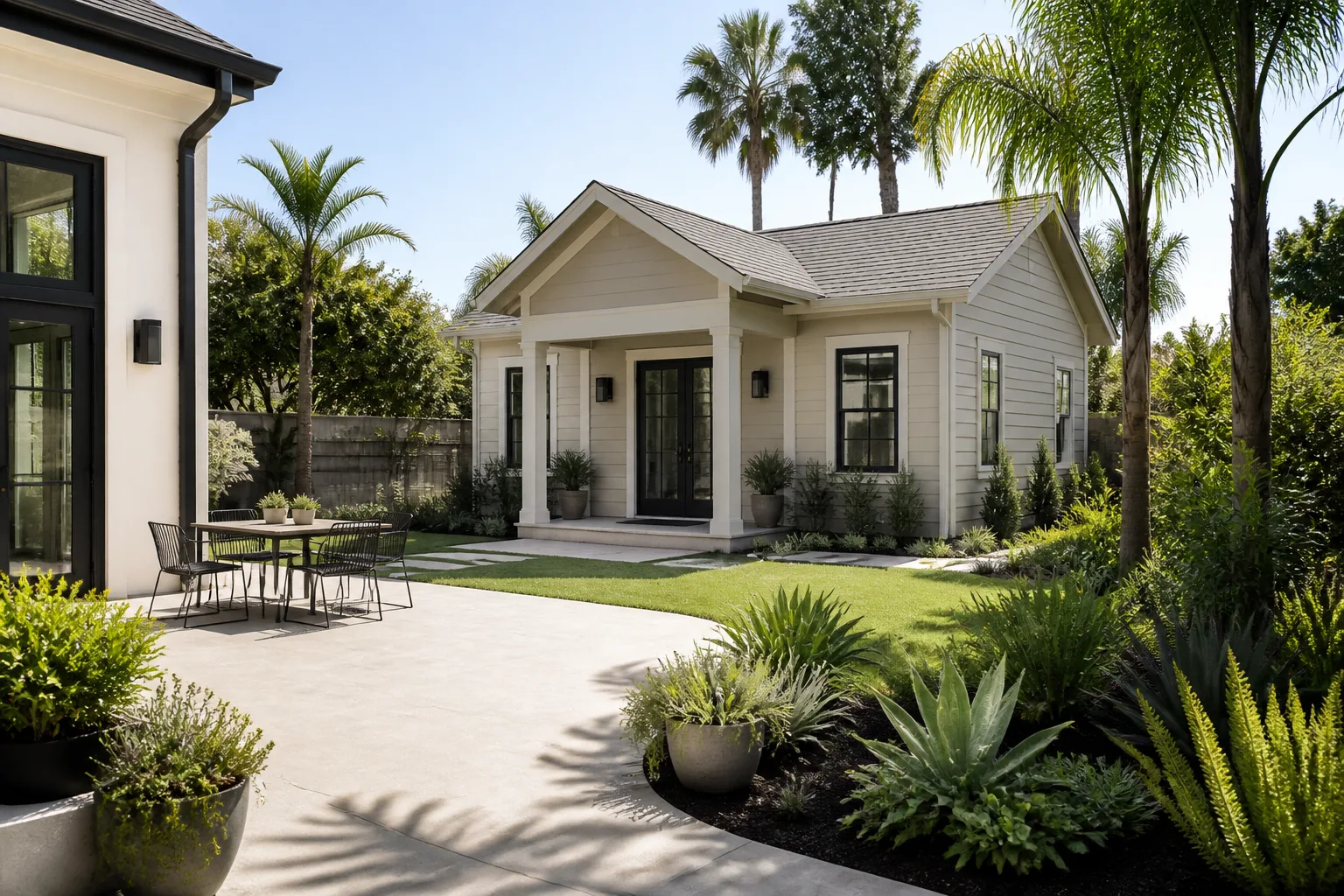
We’re an independent Austin contractor, not affiliated with Abodu, but we’ve worked on enough of their units to know exactly how their fence systems go together and what fails first in Texas weather.
Which Abodu Models This Applies To
Abodu’s accessory dwelling units ship with a standardized fence mounting detail, but the exact hardware depends on whether your unit was placed on a concrete pad, pier-and-beam, or gravel base. The bracket spacing is the thing to check: Abodu’s spec calls for post anchors at 6-foot centers on level grade, but we’ve measured field installations anywhere from 58 to 74 inches apart depending on how the site crew worked around existing trees or utility boxes.
Here’s the compatibility gotcha most Austin owners don’t realize until the gate stops latching: Abodu’s panel rails are drilled for their proprietary bracket, but the bracket itself uses standard 3/8-inch galvanized lag bolts. When those bolts rust out, which they do faster here than in California because of our clay soil holding moisture against the post base, the panel stays intact but the connection fails. We stock both the original-spec brackets and a heavier-gauge aftermarket version that lasts roughly twice as long in Travis County soil conditions. You can identify your generation by checking the stamp on the inside face of the gate hinge plate: “AB-1” units use the lighter bracket, “AB-2” and later use the reinforced plate.
Most Abodu fences we replace in Austin are cedar or pressure-treated pine with either a horizontal board layout or a board-on-board privacy pattern. The horizontal style looks sharp for about four years, then Texas sun and humidity start cupping the boards outward. Board-on-board holds up better aesthetically, but it’s also 20 to 30 percent heavier, which means the posts carry more load and fail sooner if they weren’t set deep enough in the first place.
Styles & brands we work with







Signs Your Abodu Fence Installation Is Failing
- Gate drags across the ground on the latch side. This is almost always post lean from saturated clay soil. The post didn’t fail; the hole wasn’t dug below the frost-and-moisture line, which in Austin means at least 24 to 30 inches. We fix it by resetting the post deeper, not by shaving the gate bottom.
- Corner post cracks at ground level. Cedar and pine both rot at the soil contact point. In Austin’s alternating wet-dry cycle, the bottom of the post swells with moisture, then dries and shrinks. Over three or four seasons, that movement creates lengthwise splits. Once the split reaches the bracket bolts, the whole corner loses rigidity.
- Panels rattle hard in wind but brackets look fine. That means the lag bolts have sheared inside the post. What’s left in the wood might be half a dozen rusted stubs. We see this most often on fences facing open greenbelts or along the 183 corridor where gusts hit constantly.
- Screw heads pop through the panel face. Run screws too near a board edge and Texas heat does the rest. The wood dries to near-zero moisture in August, shrinks, and the screw head blows through the remaining quarter-inch of grain. It’s cosmetic now, structural later if enough of them go.
- Gate latch plate pulls away from the post. The bracket is fine; the wood behind it is gone. Austin’s humidity holds moisture against the plate, and without proper flashing or a moisture barrier, the post face turns soft. Tightening the screws only buys you a month, and then the plate falls off entirely.
See the difference
 Before
 After
After Before
 After
After Before
 After
AfterReplacement Cost & What’s Included

For a standard 40 to 60 linear foot fence around an Abodu unit in Austin, you’re looking at $3,500 to $9,000 installed. The range breaks down like this:
- $1,800 to $3,200 for pressure-treated pine posts, rails, and pickets on a standard 6-foot privacy layout
- $2,400 to $4,100 for cedar in the same layout, with staining sealed joints that hold up better to Travis County humidity
- $900 to $1,800 for gate hardware, including a reinforced Abodu-compatible hinge package and a latch assembly that won’t rust through in five years
- $800 to $2,000 for demolition and haul-off of the old fence, post extraction, and any concrete collar work if the original posts were set in concrete footings
What drives the number up? Steep grade changes (Mueller and parts of Northwest Hills have real elevation swing), rocky soil where we’re cutting through limestone to set posts, and custom gate widths if you have a wide side yard. Every quote we give in Austin is a written price before any work starts. The number on day one is the number on the final invoice. And every fence installation carries our 365-Day Done Right Promise: if anything shifts, splits, or loosens inside the guarantee period, we come back and fix it at no charge. No second-visit fee, no re-inspection charge. It’s written into every contract.
DIY or Call Us?
There are things you can safely check on an Abodu fence in Austin before you pick up a phone. Walk the perimeter and look at the post bases. If you see a gap between post and soil, that post is moving. Push gently on each panel from both sides. Any panel that shifts more than half an inch is losing bracket connection. Check every gate latch plate for wood softness with a flathead screwdriver. If the tip sinks in, the post face is compromised.
Here’s where DIY goes sideways on these specific units. The Abodu bracket spacing is non-standard, and big-box fence panels are built at exactly 6 feet or 8 feet. If your unit’s panels are off-spaced, which many are, you’ll be cutting and shimming every single panel, and the result looks patchy within a season. Gate installation on sloped Austin lots involves hinge geometry most homeowners only learn by failing three times. And post removal in Travis County means either a jack, a chain, and a lot of sweat, or a concrete saw and a new hole below the moisture line. If the post has been set in concrete and the concrete collar is still solid, you’re fighting a 300-pound block. We’ve done it hundreds of times. You shouldn’t have to do it once.
Call (325) 225-5429 and we’ll come measure, inspect the existing brackets, and hand you a written price before any work starts. Tell me what you need, I’ll tell you what it costs, and we’ll go from there.
FAQs

A properly installed privacy fence around an Abodu unit in Austin should last 12 to 18 years with pressure-treated pine and 18 to 25 years with cedar that’s been sealed at the joints. The lifespan-limiting factor here isn’t the wood; it’s the post-to-soil contact point and the bracket hardware. Most fences we replace aren’t failing because the panels wore out, they’re failing because the posts or brackets gave up early. If your fence is under 10 years old and already leaning, the installation depth or the hardware is the problem, not the material.
Sometimes, yes. If the panels are sound and one or two posts are leaning, we can reset those posts and replace the affected brackets for $400 to $900 per post, depending on whether we’re cutting through concrete or hitting limestone. If the panels are split, cupped, or pulling away from the rails across more than 30 percent of the fence, replacement is usually cheaper than piecemeal repair. We’ll tell you which one we’d do on our own house and price both options in writing. Call (325) 225-5429 for an exact quote, estimates are free.
Most Abodu fence replacements in Austin are two to three days from first post hole to final gate adjustment. Day one is demolition, post extraction, and new post setting. Day two is rails, panels, and gate hanging. If we hit limestone shelf or need to pour new concrete footings, add a half day. You’ll get an arrival window in writing before we start, and the crew is background-checked and in uniform every day.
We keep the standard Abodu bracket sizes, both the original-spec and heavy-gauge aftermarket versions, plus gate hinges and latch assemblies for the AB-1 and AB-2 generations, loaded on our Austin service trucks. Posts, cement, and panel stock we bring based on the written quote, but the Abodu-specific hardware is on hand for every job we schedule. If you need a specific bracket matched to your unit’s stamping, call (325) 225-5429 and describe the plate marking; we’ll confirm we have it before you commit to anything.
Written by Trevor Nash, Owner, Penhallow Remodeling Austin at Penhallow Remodeling Austin, serving Austin and nearby areas.


