






Free written scope consultation - allowances, timeline, and change-order rules on paper before a single trade is scheduled
Unilock Home Additions & ADU: The Austin Owner’s Guide
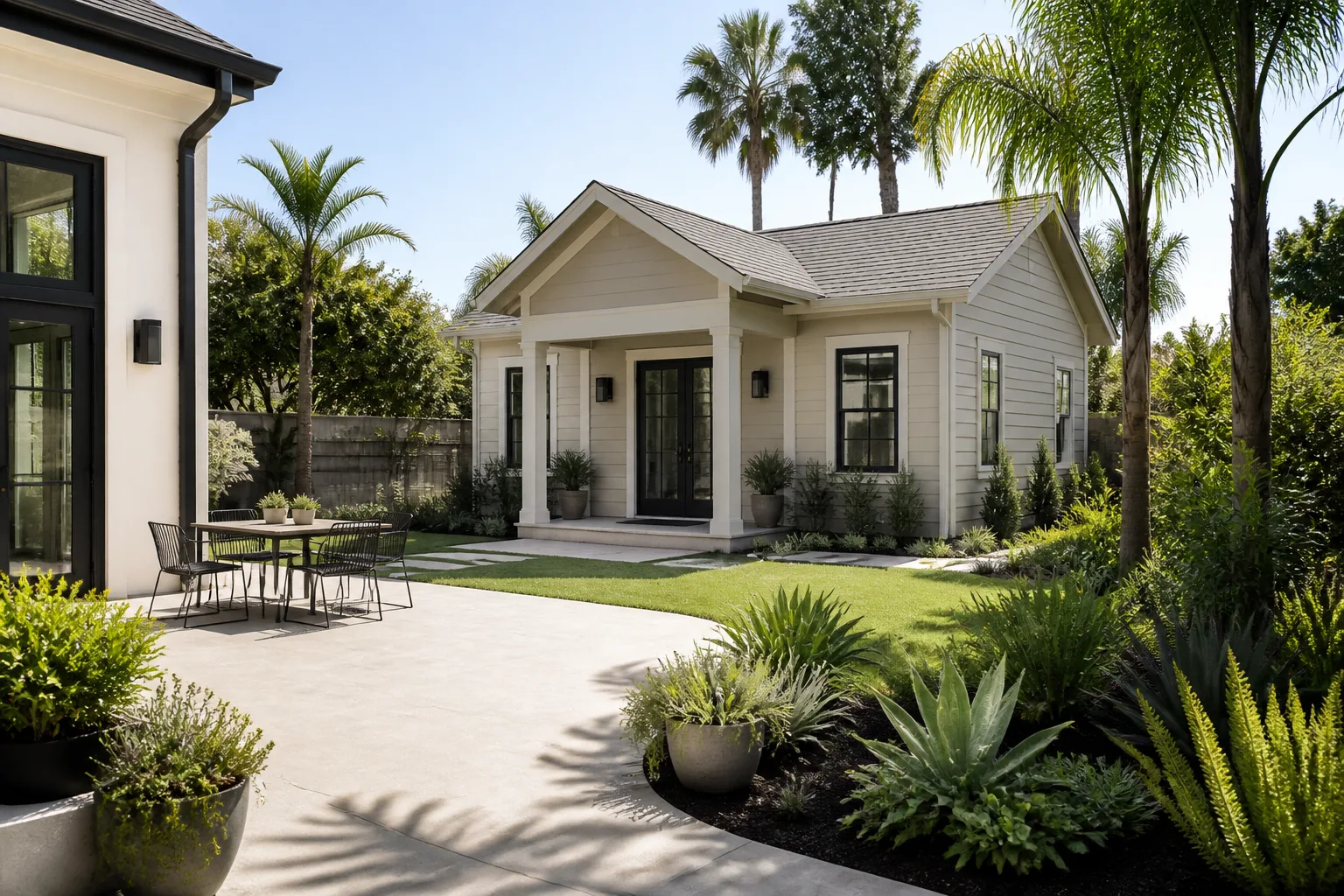
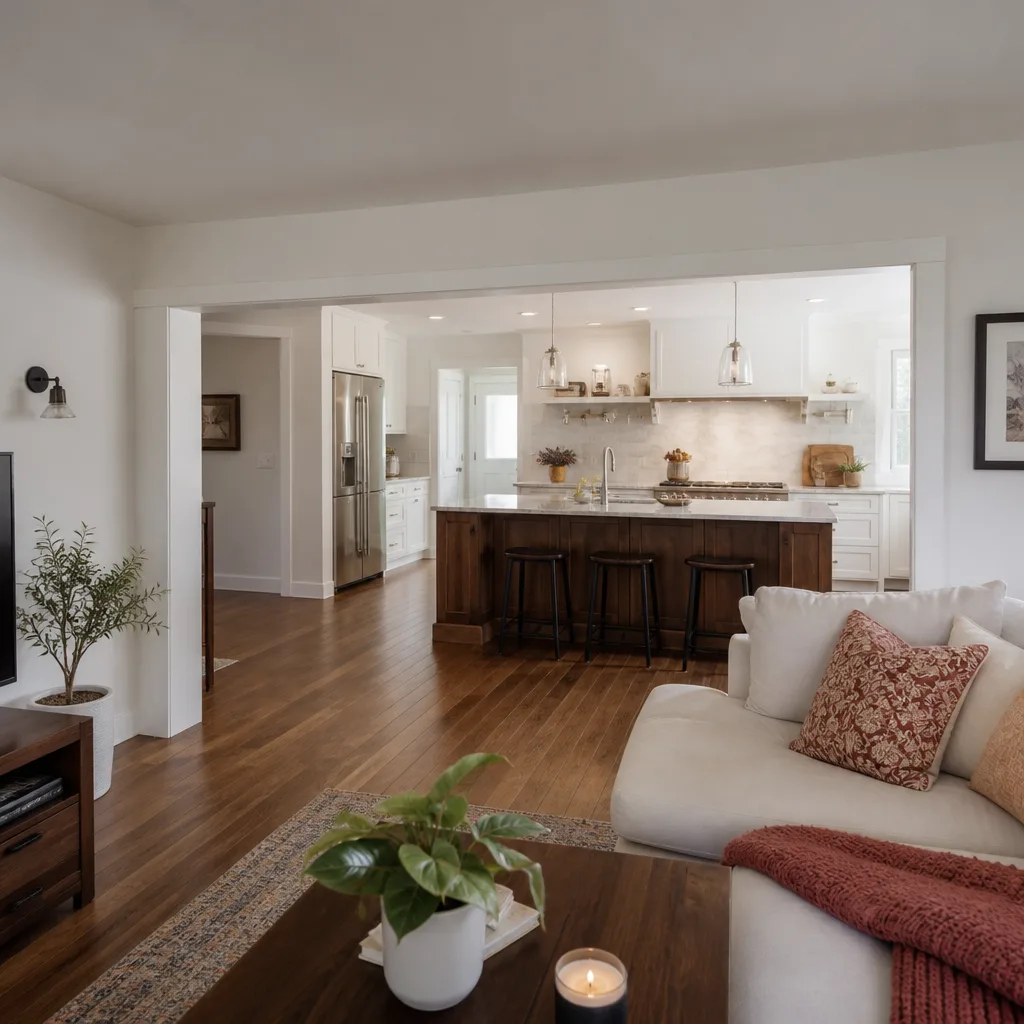
If you’re planning a home addition or ADU in Austin using Unilock materials, you’re looking at an installed price between $45,000 and $130,000 depending on square footage, foundation work, utility runs, and finish level. Most owners discover they need help not because the Unilock product failed, but because the integration failed, meaning the way the addition ties into the existing slab, roofline, or drainage didn’t hold up against Central Texas clay soil and our freeze-thaw-adjacent temperature swings. We stock Unilock-compatible wall block, pavers, and edge restraints on our trucks for additions and ADU projects, and we can typically start the planning and pricing conversation the same day you call.
Here’s the thing about Unilock in Austin: the product itself is solid. What fails first is almost always what’s underneath it or what’s beside it. A paver patio attached to a new ADU shifts because the base wasn’t compacted for our expansive clay. A retaining wall between your addition and the neighbor’s fence starts leaning because nobody accounted for how Austin’s Hill Country runoff behaves in a downpour. That’s the page you need to read, so let’s get into it.
At Penhallow Remodeling Austin, we’re an independent general contractor, not affiliated with Unilock directly. We install their materials because they hold up, but the warranty on the installation is ours, and it’s in writing. Trevor Nash built this company on that principle: give the customer a real number on day one and then do exactly what you said you’d do.
Which Unilock Models This Applies To
Unilock makes a wide range of hardscape and wall products that show up in Austin home additions and ADU projects, and the compatibility question depends on which product line you’re working with. The Estate Wall and Pisa lines are the two you’ll most often see in residential additions around Austin, and they are not interchangeable. Estate Wall blocks have a specific setback angle and require a matching cap; Pisa uses a different pin system. If you have a partial wall and need to match it, you’ll need the exact product line, the color code stamped on the block, and ideally the production date. Unilock colors shift subtly between manufacturing runs, and a block poured in 2022 will not match a block poured in 2025, even if both say “Sierra” on the tag.
For pavers used in ADU patios, walkways, and driveways, the two big lines in Austin are Brussels Block and Richcliff. Brussels Block has a tumbled, older look and a larger format. Richcliff is a rectangular paver meant to read like cut stone. Both are excellent, but they have different joint widths and different base requirements. If you’re extending an existing paver area and don’t know which one you have, measure the paver: Brussels Block runs roughly 9″ x 7″, while Richcliff comes in a 12″ x 6″ format. That measurement alone saves us a trip and saves you a service call.
On the OEM-versus-aftermarket question: for Unilock specifically, there is no real aftermarket equivalent that matches. Unilock uses proprietary molds and color blends. A “close enough” block from a big-box store will be visibly off, and on a $45,000 or $90,000 addition, that visible off is the first thing you’ll see every morning for the next fifteen years. We source Unilock directly through their regional distribution network. You pay the same or less than we would for a generic, and you get an actual match.
Styles & brands we work with







Signs Your Unilock Home Additions & ADU Is Failing
If you’re reading this because something doesn’t look right, here are the five most common failure patterns we see in Austin, with the root cause for each:
- Paver edges are dropping or spreading at the perimeter of your addition. This is almost always a missing or failed edge restraint. Austin’s clay soil expands when wet and contracts when dry, which pushes outward on the perimeter of any paver field. Without a proper plastic or concrete edge restraint, the pavers walk outward and the edge collapses. The fix is pulling back the edge pavers, reinstalling the restraint, and recompacting.
- A retaining wall is leaning or bulging after rain. Central Texas gets long dry spells followed by sudden heavy downpours. If the wall was built without proper drainage stone behind it, or without weep holes, water pressure builds up and pushes the wall out. We see this constantly on ADUs built into a slope in neighborhoods like Barton Hills and Northwest Hills. The wall has to come apart and go back up with drainage behind it. There’s no patch for hydrostatic pressure.
- Efflorescence, the white chalky film, keeps coming back on wall block or pavers. Efflorescence is mineral salts migrating out of the concrete. In Austin, our hard water and clay-heavy soil make it more persistent than in most markets. One cleaning won’t fix it if the water source behind the wall or under the paver base isn’t addressed. We’re more aggressive than most contractors about drainage because we know it’s the difference between a one-time cosmetic clean and a recurring problem.
- Joints between pavers are disappearing. The polymeric sand in the joints washes out over time in Austin’s flash-flood conditions, especially on a sloped lot. When the sand washes out, the pavers shift, and if you don’t fill the joints, the whole field starts to rack. That’s a $500 problem that becomes a $5,000 problem if it’s ignored for two rainy seasons.
- New addition slab meets old slab and there’s a differential crack at the Unilock threshold. This one isn’t a Unilock failure at all, it’s an integration failure. When a new addition is poured against an existing slab, the joint has to be planned for movement. If the Unilock paver transition at the doorway was installed rigidly across that joint, the pavers will crack or heave within two or three Austin summers. The fix is isolating the Unilock threshold from the two moving slabs and replacing the damaged pavers.
See the difference
 Before
 After
After Before
 After
After Before
 After
AfterReplacement Cost & What’s Included

Let me give you the straight numbers for Austin. A full home addition runs $45,000 to $130,000. An ADU, which means a separate living unit with its own kitchen and bath, runs $90,000 to $220,000. A garage conversion falls between $30,000 and $80,000. The Unilock-related scope within that project, meaning the hardscape, walls, walkways, and patio areas, is typically 5 to 10 percent of the total, but it’s the part people see and walk on every single day.
What drives the range on the Unilock scope: site prep, and site prep again. If the area behind your addition or under your ADU patio is flat and drains well, the base work is straightforward and you’re at the lower end. If we’re cutting into a slope, building a retaining wall, running drainage, or dealing with heavy clay that needs over-excavation and structural fill, the number climbs. Materials are the smaller variable. Labor and machine time are the bigger ones.
Every Penhallow Remodeling Austin project gets a written price before any work starts, not a verbal range and not a “we’ll see how it goes.” The number you approve is the number on the invoice. If anything unexpected shows up once we open the ground, we stop and show you what we found and what it changes, before we spend a dollar of your money beyond the approved number. The work is covered by our 365-Day Done Right Promise, in writing: if it fails inside a year, we come back and fix it at no charge.
Here’s the honest breakdown of what that looks like in practice:
- Unilock paver patio or walkway with proper base: $12 to $22 per square foot installed in Austin.
- Unilock retaining wall with drainage: $28 to $45 per square foot of wall face, depending on height and access.
- Edge restraint repair or replacement: $250 to $700 in most cases.
- Polymeric sand joint refill: $300 to $600 for a typical patio or walkway.
- Efflorescence treatment and drainage correction: $400 to $1,200 depending on how much wall we have to open up.
DIY or Call Us?
Here’s my honest take, and I’ll tell you the same thing I’d tell you across your kitchen table. The small stuff, you can handle. Refilling poly sand in joints? Yes, you can do that on a Saturday, and I’ll even tell you which sand to buy. Cleaning efflorescence with a mild acid wash? You can do that too, carefully, with gloves and a hose and the right dilution. Checking whether your edge restraint is still in place? You can absolutely walk the perimeter and look.
The bigger stuff, no, and here’s why. Any Unilock wall over three feet tall carries real lateral load. In Austin’s expansive clay, that load changes every time it rains. If you’re tearing apart a leaning wall or resetting a threshold over a slab joint, you’re handling heavy units in an unstable condition, and you’ll need the wall to be right so it doesn’t become a liability to your house or your neighbor’s. That’s the line. If the failure involves structure, slope, or drainage, call us at (325) 225-5429 and we’ll give you a written number before any work starts.
And the middle ground: if you’re not sure which category you’re in, call anyway. Tell me what you need, I’ll tell you what it costs, and we’ll go from there.
FAQs

A properly installed Unilock installation in Austin should last 20 to 30 years, and the pavers themselves can outlive that. What fails first is almost always the base, the edge restraint, or the drainage, not the Unilock unit. That’s why we’re more particular than most about what’s under and behind the product. If the base is done right for Austin slab clay, you’ll replace the sand in the joints before you replace a single paver. Call (325) 225-5429 if you want us to look at what you have and tell you honestly how much life is left in it.
You can absolutely repair a section. Unilock products are modular, which means you pull the damaged area, fix what’s underneath, and reinstall. The catch is matching: colors fade and shift over time, and manufacturing runs differ slightly. We’ll source the closest current run, and in most Austin sunlight, a well-matched repair is invisible to anyone who isn’t looking for it. If you want the match to be as clean as possible, we’d rather do it sooner than later while the original color is still in production. Call us for a free estimate and we’ll tell you straight up how close a match we can get.
A typical repair, meaning edge restraint reset, joint refill, or a small section of pavers, is a one to two day job. A retaining wall rebuild behind an existing ADU is usually three to five working days depending on access for the machine. A full Unilock patio attached to a new addition fits inside the overall addition schedule, and we’ll give you a written timeline before any work starts. We show up in the window we gave you and we leave the site cleaner than we found it.
We keep common Unilock edge restraints and joint sand on our trucks, and we order wall block and pavers from Unilock’s regional distribution as soon as the scope is approved, which means we aren’t waiting two weeks just to price your job. For most repairs, materials are on site within a week of approval. For full additions and ADU packages, we order early in the project so the Unilock materials are waiting when the site is ready. If you’re in a pinch, call (325) 225-5429 and we’ll tell you the real lead time for your specific product and color.
Written by Trevor Nash, Owner, Penhallow Remodeling Austin at Penhallow Remodeling Austin, serving Austin and nearby areas.


