



Free written scope consultation - allowances, timeline, and change-order rules on paper before a single trade is scheduled
Owens Corning Bathroom Remodeling: The Austin Owner’s Guide
If you’re searching for Owens Corning bathroom remodeling in Austin, the installed cost typically runs $9,000 – $28,000 depending on the size of the bathroom, the materials you choose, and how much of the existing structure needs to come out. We work with Owens Corning-backed systems specifically because the substrate layers, waterproofing membranes, and backing boards carry the same spec discipline as the brand’s insulation and roofing products. Most Austin homeowners call us after they’ve already lived through one failed install, so if you’re seeing peeling corners, recurring mildew, or cracked grout lines, you’re in the right place.
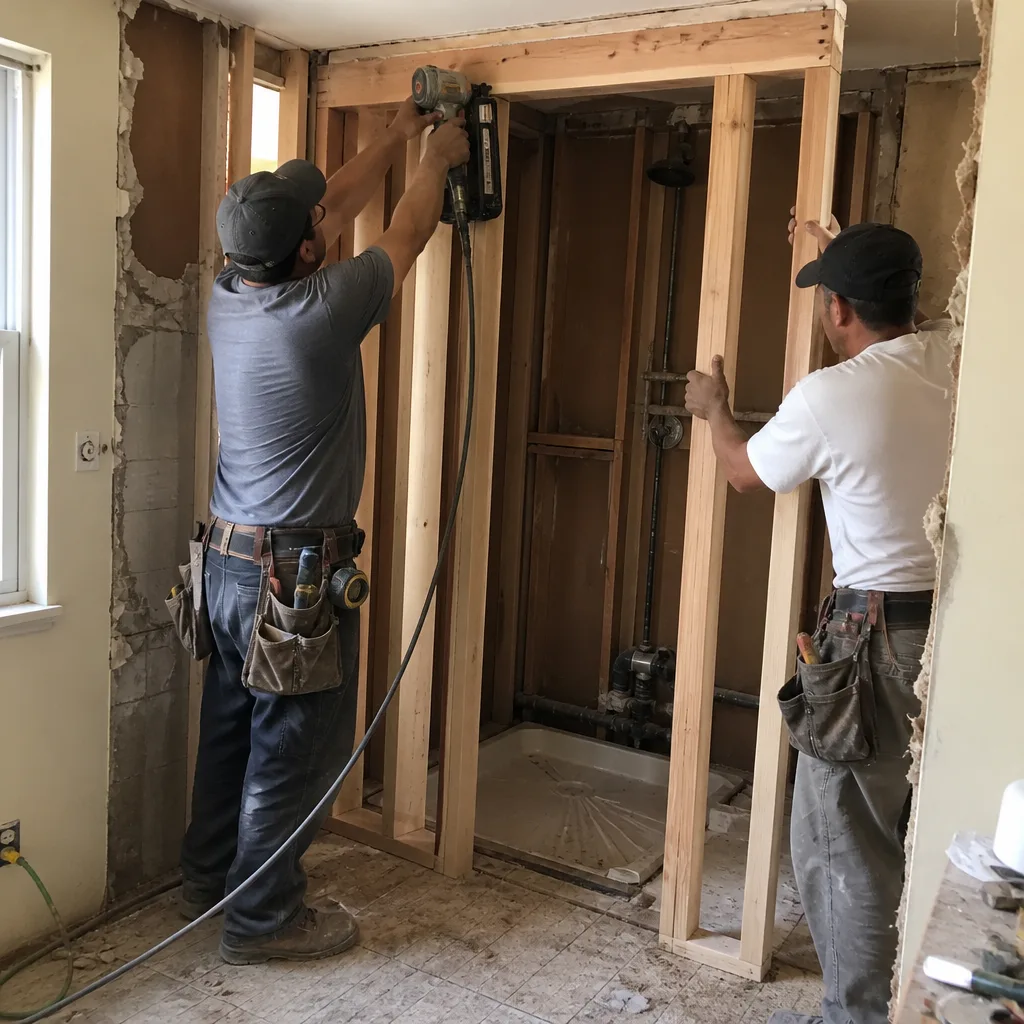
We’re Penhallow Remodeling Austin, and we’ve been tearing out and rebuilding bathrooms throughout Austin for well over a decade. We’re an independent remodeling contractor, not an Owens Corning dealer or affiliate, but we’re familiar with how Owens Corning components perform in Central Texas heat and humidity. What we bring to the table: a written price before any work starts, background-checked crews in uniform, and a 365-day promise to make it right if anything fails inside the guarantee period.
Which Owens Corning Models This Applies To

Owens Corning doesn’t manufacture a single “bathroom system” the way you’d think of a furnace or a water heater. Instead, their bathroom-relevant products fall into three categories: Owens Corning FOAMULAR extruded polystyrene (XPS) panels used as backer board in wet areas, Owens Corning Thermafiber mineral wool insulation for exterior-facing bathroom walls, and their joint-sealing and waterproof flashing accessories that tie into their roofing assemblies when a bathroom abuts an exterior wall or a skylight well. The compatibility question isn’t about a model number on a box; it’s about whether the layered assembly, the substrate, the waterproofing, and the tile or stone finish, was built to handle the moisture load of an Austin bathroom.
Here’s the gotcha we see too often: homeowners buy a house where the previous owner’s contractor used green board (moisture-resistant drywall) behind the tile instead of a true cement board substrate or an XPS backer. Green board is rated for damp locations, not wet ones, and in an Austin shower enclosure that sees daily steam plus hard-water mineral buildup, it starts to crumble at the edges within a few years. When we open up a wall, we’re checking for that. If you’re unsure what’s behind your tile, one checkable sign is the grout line at the tub or shower base: if the grout is cracked along the bottom seam but the tile above looks fine, the substrate below is usually the culprit, and that’s exactly the kind of failure Owens Corning’s rigid foam panels are designed to prevent when installed correctly. We’ll also note whether the original installer used a surface-applied waterproofing membrane (like a liquid or sheet membrane) or relied on the board alone, because that decision changes whether we can reuse your existing drainage assembly or need to reset the pan entirely.
Styles & brands we work with







Signs Your Owens Corning Bathroom Remodeling Is Failing
- Grout cracking at the tub or shower base, while the wall tiles look fine: This almost always means the substrate behind the tile absorbed moisture and swelled. In a properly built wet area, the grout line at the bottom stays intact long after the upper grout needs cosmetic touch-ups. Swollen substrate is a tear-out-and-replace situation, not a regrout job.
- Persistent mildew in the same corner, even after you scrub it with bleach or a commercial cleaner: Surface mildew comes back when water has found a path behind the surface. Once moisture is trapped inside a wall cavity that Austin’s summers keep warm and humid from the exterior, no amount of surface cleaning stops it. The fix is finding the water path and sealing it at the source.
- A soft spot in the drywall or backer board near the shower valve or the tub spout: Press the wall gently near the plumbing. If it gives or feels spongy, the moisture barrier has already been compromised. The valve is the most common entry point because the original plumber’s cutout was never properly sealed after the trim plate went on.
- Floor tile movement or a cracked toilet flange: Bathroom floors endure a full humidity cycle every single day in Austin, from a morning shower’s steam to an afternoon of air-conditioned dryness. That cycle stresses subfloor panels and can loosen even a well-set tile. If a floor tile rocks even slightly, water from splashing eventually works under the tile and into the subfloor, and the toilet flange takes the weight of every movement above.
- You hear a faint dripping inside a wall after the shower runs: This one’s easy to dismiss. But a drip behind a shower wall means a supply line or a drain connection has failed, and the water is traveling down the inside of the cavity. The visible damage may not show up for another six months, but by then the subfloor and the studs have been wet the entire time.
See the difference
 Before
 After
After Before
 After
After Before
 After
AfterReplacement Cost & What’s Included
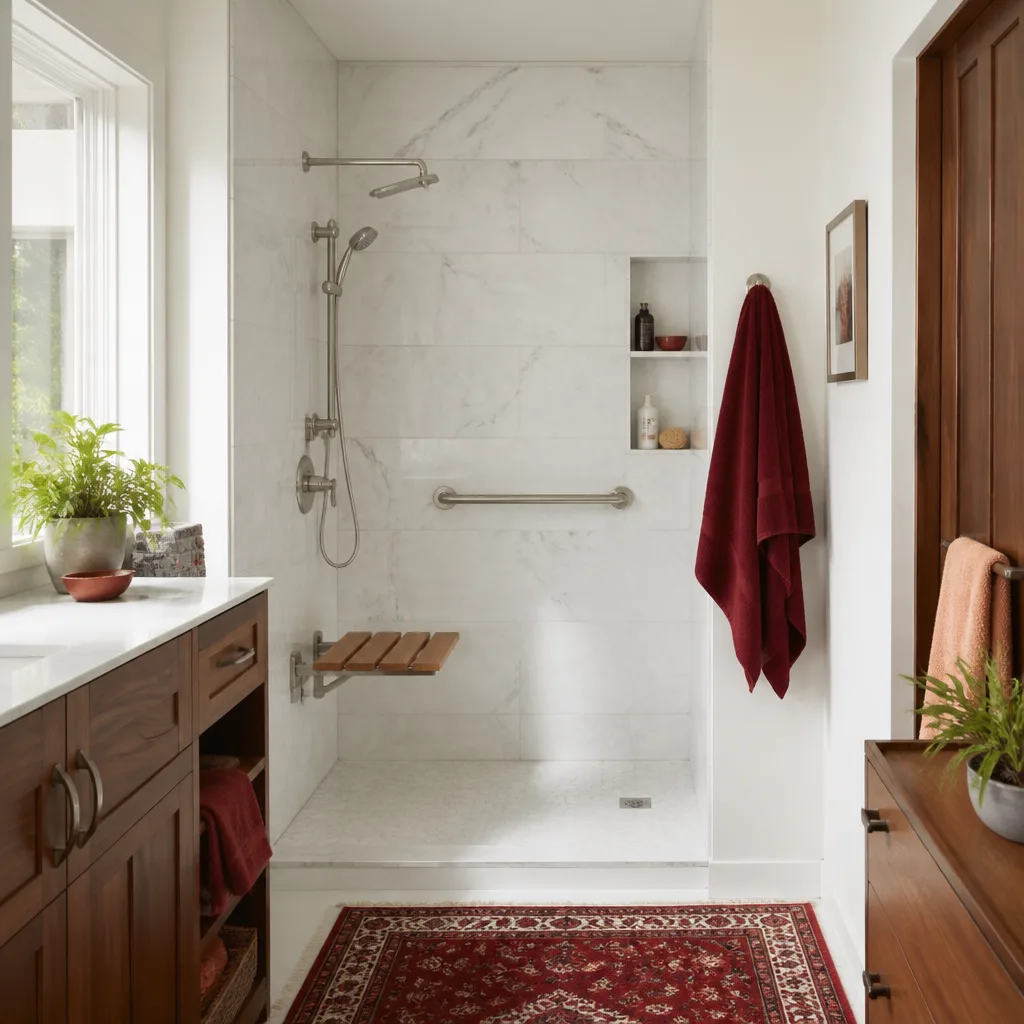
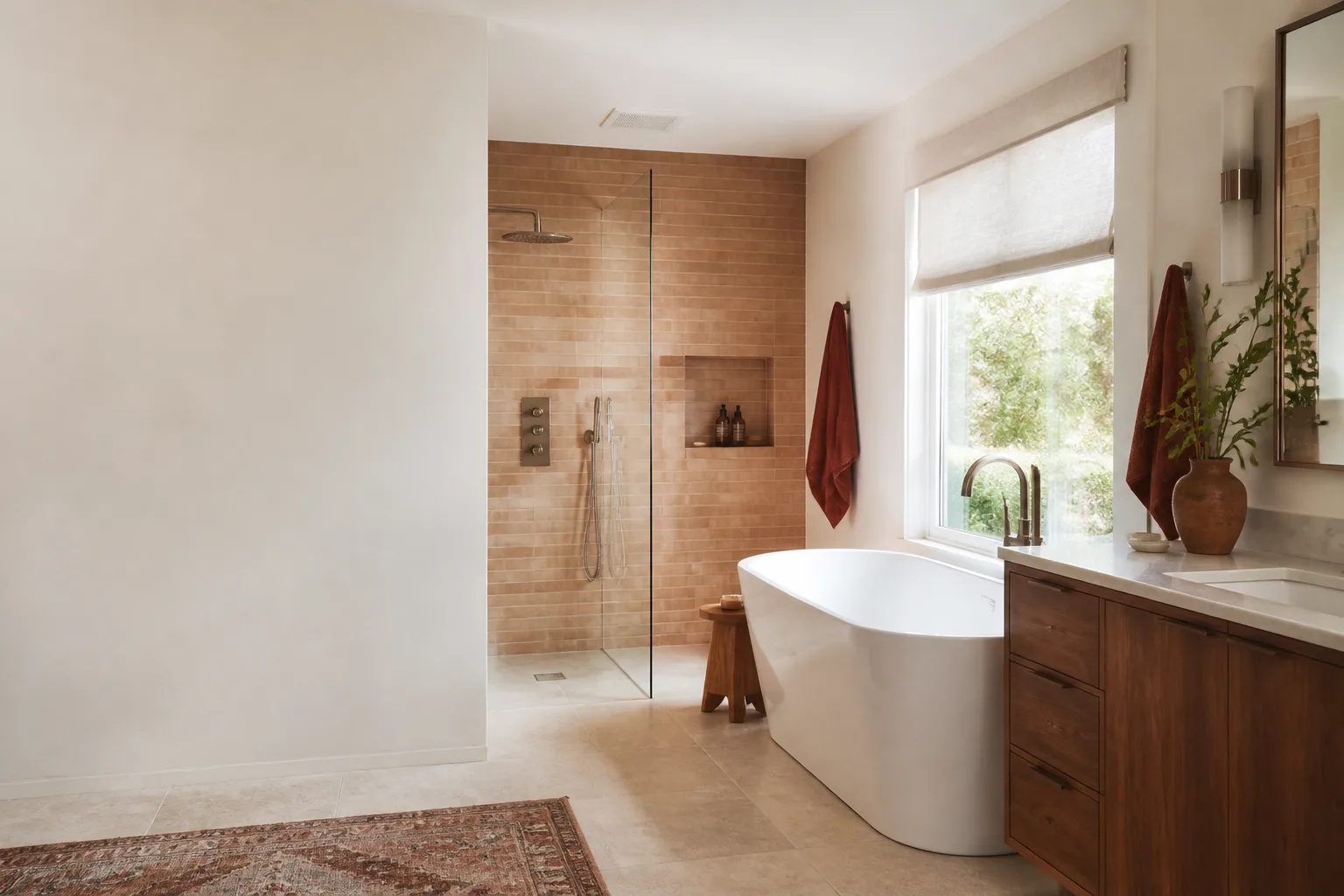
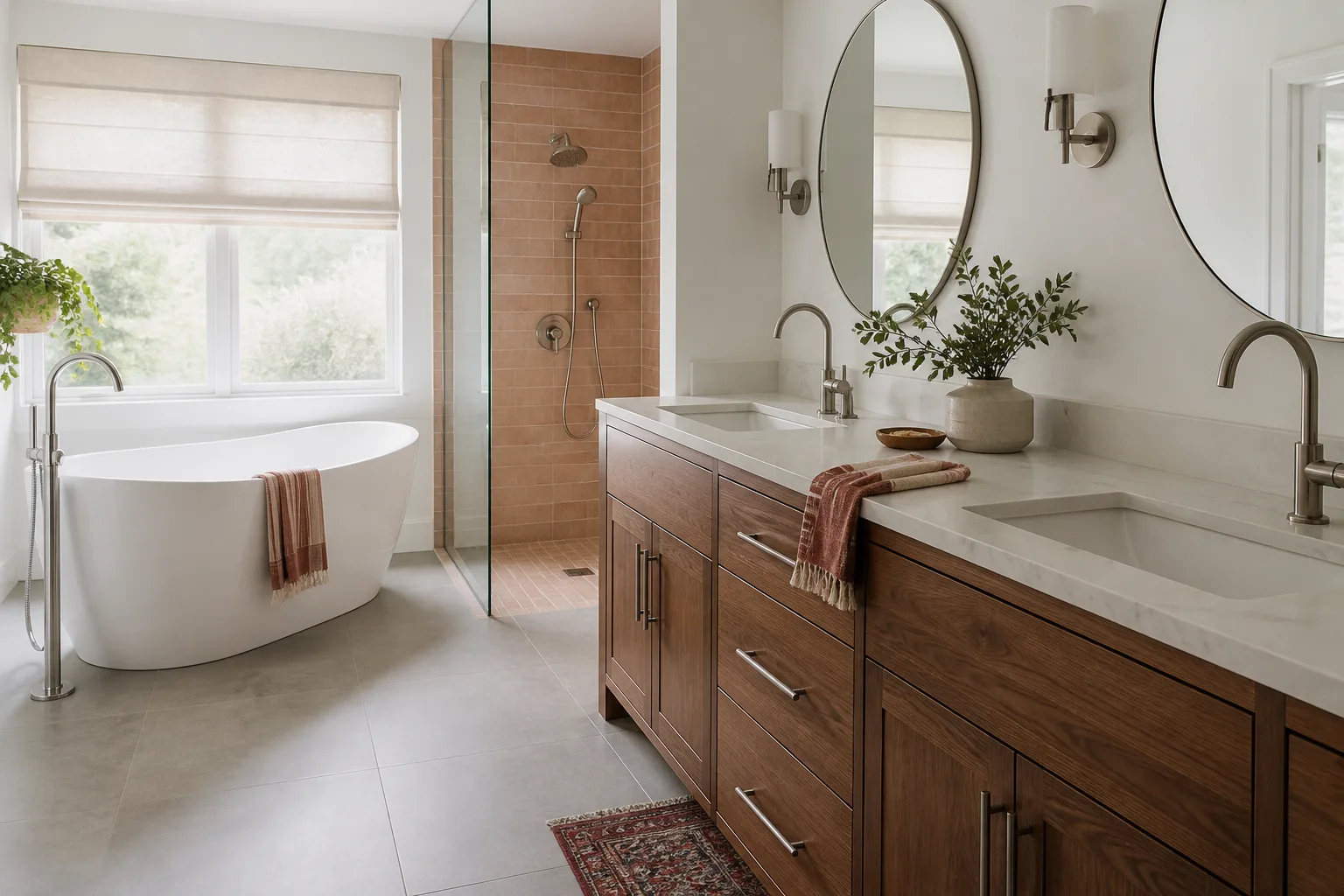
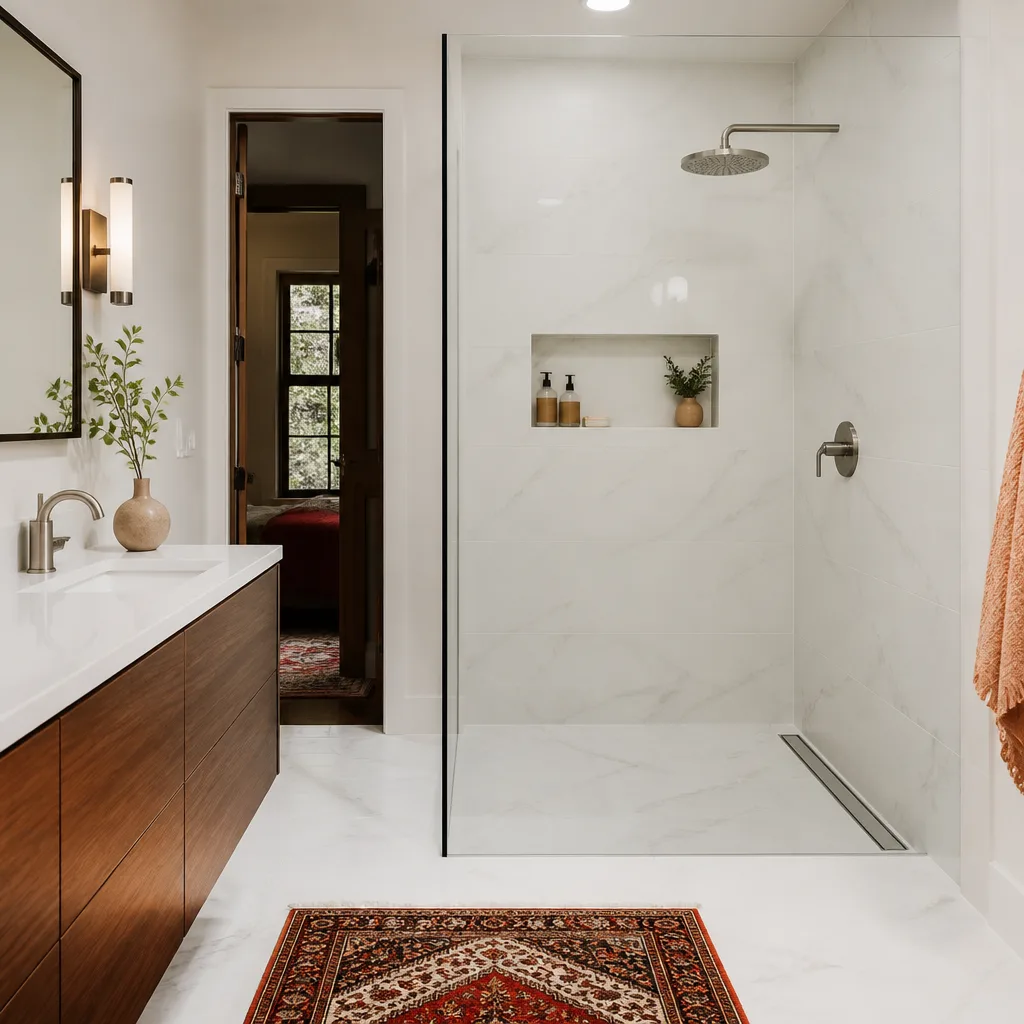
For a full bathroom remodel in the Austin market, plan on $9,000 – $28,000 installed. At the lower end of that range, you’re looking at a modest hall bath with existing plumbing staying where it is, a standard tub or shower replacement, builder-grade tile, and a stock vanity. At the upper end, you’re moving plumbing lines, adding a walk-in shower with a custom pan, installing higher-end tile or stone, new cabinetry, and correcting whatever the previous contractor did wrong behind the walls. The cost drivers, in order of impact: moving plumbing, the size of the wet area, tile and stone selection, and the condition of the subfloor and framing once we open things up.
Every priced job includes the same line items, in writing: demolition and disposal, substrate and waterproofing materials, plumbing and fixture installation, tile or surround installation, finish carpentry, and cleanup. We don’t hand you an estimate range and then revise the number after demo day. The written price from Trevor Nash’s team is the number on the invoice, period. And the work carries our 365-Day Done Right Promise: if a repair or installation fails inside the year, we come back and fix it at no charge, and there’s no service call fee for that return visit.
DIY or Call Us?
Some things an owner can check safely before picking up the phone: look for cracked or loose grout along the tub base, test the floor for movement, and press gently around the shower valve for soft spots. Those checks tell you what you’re dealing with. What you should not do is open up a shower wall yourself. Bathroom walls hide plumbing, electrical, and sometimes load-bearing framing, and once you’ve cut into a wet area, the moisture barrier has to be repaired correctly or the whole assembly fails faster than it would have originally. The realistic DIY limit for a bathroom is cosmetic: caulking, painting, swapping a showerhead. Once the substrate or the waterproofing is involved, a mistake compounds quickly, and the repair becomes more expensive than the original job should have been.
Tell me what you need, I’ll tell you what it costs, and we’ll go from there. Call (325) 225-5429 and we’ll walk the bathroom with you, explain what we’re seeing, and put a written number in your hand.
FAQs

A properly built bathroom with a cement board or rigid foam substrate, a surface-applied waterproofing membrane, and correct drainage should last 20 – 30 years before the finishes need replacing. The failure point in Austin, where the summer humidity sits over 70 percent for months, is usually the sealant and grout, which wear out every 5 – 10 years and need to be maintained. We build to the 20-year-plus standard, and we back the first year of that with our written guarantee.
Call (325) 225-5429 for a free estimate on a bathroom that lasts.
If the failure is surface-level, cracked grout lines, worn caulk, a loose tile or two, a repair is usually the right call and typically runs $500 – $2,500 depending on the scope. If the substrate behind the tile has swelled, if the subfloor is soft, or if water has been running inside a wall cavity, a full tear-out of that section is required. We’ll open the wall minimally to diagnose before recommending either path, and the diagnosis doesn’t obligate you to use us for the repair.
Call (325) 225-5429 to have us take a look; the estimate is free either way.
A full bathroom remodel in Austin typically takes 2 – 4 weeks from demo to final walkthrough, depending on plumbing moves, tile setting time, and material lead times. A shower pan needs 24 – 48 hours to cure before tile goes down, and grout needs another 24 hours before the bathroom can be used. We give you a real arrival window before the job starts and stick to it; that’s part of the Kingswell standard we’ve operated under since 2004.
Call (325) 225-5429 to schedule your free estimate and get a written timeline.
We keep FOAMULAR panels, cement board, waterproofing membrane, and the associated fasteners and seam tapes on hand for the standard bathroom assemblies we install. For project-specific fixtures, tile, and cabinetry from brands like KraftMaid, Cambria, or Silestone, we order to spec so you get exactly what you chose, not what happened to be in the warehouse. The substrate and waterproofing materials are never swapped for a cheaper equivalent without asking you first.
Call (325) 225-5429 and we’ll confirm what’s in stock for your project when we walk the job.
Written by Trevor Nash, Owner, Penhallow Remodeling Austin at Penhallow Remodeling Austin, serving Austin and nearby areas.


