

Last updated October 15, 2026







Free written scope consultation - allowances, timeline, and change-order rules on paper before a single trade is scheduled
Construction Cost Breakdown: The Austin Homeowner’s Reference for 2026
When a national cost site tells you a kitchen remodel in Austin runs “$15,000 – $75,000,” that range is so wide it tells you nothing useful. The real question is what moves the number. In Austin specifically, three line items account for most of the spread: labor rates that never fully came down after the 2021 – 2023 boom, material categories still carrying supply-chain premiums, and a permit and inspection timeline that quietly adds carrying costs to any job over $50,000. This guide breaks down each of those factors with real numbers, real neighborhoods, and the kind of detail you can hand to a contractor and say, “walk me through this.” For more guides & resources, visit our blog.
Quick Answer
A realistic 2026 construction cost in Austin runs $185 – $275 per square foot for a mid-range remodel, with kitchens at $18,000 – $55,000, bathrooms at $12,000 – $35,000, and whole-home remodels at $90,000 – $220,000. The spread comes down to three Austin-specific factors: trade labor rates that remain 15 – 20% above 2019 levels, material premiums on lumber and long-lead appliances, and a permit-to-inspection cycle that can add 6 – 10 weeks and several thousand dollars in carrying costs. Line-item detail matters more than a headline number.
Styles & brands we work with







Table of Contents
- Austin Labor Costs in 2026: What Trades Still Charge a Premium
- Material Costs: Where Austin Still Runs Above National Averages
- Permits, Inspections, and Carrying Costs: The Hidden Line Item
- Fixed Price vs. Time-and-Materials: A Worked Austin Example
- Which Project Types Have the Most Variable Cost in Austin
- Sample Budgets by Project Type: What $50,000 Buys in 2026
- Common Mistakes to Avoid
- When to Call a Professional
- Frequently Asked Questions
Austin Labor Costs in 2026: What Trades Still Charge a Premium
Here’s the line-item reality most national guides miss: Austin labor did not reset after the pandemic boom. It plateaued high. In January 2026, the trades that still command premium rates are electricians, plumbers, and finish carpenters, while framing crews and general labor have softened back toward 2019 norms. A licensed electrician in Austin now bills $110 – $150 per hour on remodel work. A master plumber runs $105 – $140. Finish carpenters, the ones doing cabinet installs, crown molding, and trim, sit at $85 – $120 per hour. Those numbers are 20 – 30% above what the same trades billed in 2019, and they show no sign of dropping.
Why? The Austin metro added roughly 180,000 residents between 2020 and 2025. A large share of them bought homes built in the 1990s and early 2000s that are now hitting the 20 – 25 year mark, when kitchens and bathrooms need real work. Demand stayed high while the skilled labor pool, especially licensed electricians and plumbers, grew slowly. Apprentice programs take four to five years to produce a journeyman. The math does not bend quickly.
What has normalized: demolition labor, drywall hanging, painting, and general carpentry. These trades are back to billing $45 – $75 per hour, which is close to pre-pandemic levels after adjusting for inflation. The takeaway for an Austin homeowner: don’t budget a flat “labor cost” across all trades. Budget by trade, because the spread between an electrician and a painter is now three to four times wider than it was in 2019.
In our experience across general contractor work in Austin, the single largest labor line item on a kitchen remodel is not the cabinets or counters. It’s the electrical and plumbing rough-in, especially in older homes in neighborhoods like Crestview, Allandale, and Cherrywood, where the existing wiring and drain lines often date to the 1960s and need replacement before any finish work can begin. That’s a $6,000 – $12,000 line item many homeowners do not see coming.
Material Costs: Where Austin Still Runs Above National Averages
National cost guides assume the cost of a sheet of plywood or a box of tile is roughly the same everywhere. That was never quite true, and in 2026 it’s actively misleading. Austin sits at the end of several supply chains. Lumber comes from East Texas and Louisiana mills, but when those mills run short, Austin buyers compete with Dallas, Houston, and San Antonio for the same loads. Appliance lead times for premium brands still run 8 – 14 weeks, and that means you’re either paying a warehousing premium to get inventory earlier or budgeting to wait.
Here’s the current reality by category:
- Lumber and sheet goods: Still 8 – 12% above national average. A sheet of 3/4″ cabinet-grade plywood that runs $62 in Dallas can cost $68 – $74 in Austin. On a whole-home remodel using 200+ sheets, that’s a $1,200 – $2,400 line item difference.
- Tile and stone: Largely normalized, with one exception: large-format porcelain (24″x48″ and larger) still carries a 5 – 10% premium because Austin distributors stock less of it and order in smaller quantities.
- Appliances: Premium brands with long lead times (Sub-Zero, Wolf, Thermador, Miele) still show 10 – 14 week waits in Austin. If you want them sooner, you’re paying a 10 – 20% premium through an appliance broker who bought inventory. Mid-tier brands (GE Profile, KitchenAid, Bosch) are back to 2 – 4 week lead times.
- Windows and doors: Normalized nationally, but Austin’s energy code requirements (specifically the 2021 IECC with Austin amendments) push buyers toward low-E, double-pane, argon-filled units that cost 12 – 18% more than the base models national guides quote.
- Countertops: Here’s where Austin has quietly normalized. Quartz lines like Silestone and Caesarstone, and natural stone slabs, are back to 2 – 3 week fabrication and install timelines, and pricing is within 3 – 5% of national averages. The premium is on exotic veining and book-matched slabs, not on standard colors.
What this means for your budget: if a national guide says a material category costs X, add 8 – 12% for anything wood-framed or sheathed, add 5 – 10% for large-format tile or energy-code-compliant windows, and don’t count on appliance prices dropping before your project starts.
Permits, Inspections, and Carrying Costs: The Hidden Line Item
This is the one Austin homeowners routinely under-budget, and it’s the line item that separates a $45,000 kitchen from a $52,000 kitchen. See our Construction Warning Signs: A Austin Homeowner’s Reference Guide for other commonly missed costs. Austin’s Development Services Department has improved cycle times since the 2022 backlog, but the process still takes time, and time is money when you’re paying a general contractor to manage the job or carrying a construction loan.
Here’s a realistic timeline for a mid-size remodel in Austin in 2026:
- Permit application and plan review: 2 – 4 weeks for a remodel. Additions and structural work run 4 – 8 weeks. Express review can cut this to 1 week for simple projects.
- Permit fees: Austin charges based on project valuation. A $75,000 remodel typically carries $1,800 – $2,800 in permit fees. A $200,000 addition runs $4,500 – $7,000. These are real, non-negotiable costs.
- Inspection scheduling: Once work starts, each inspection (rough-in electrical, rough-in plumbing, framing, insulation, final) is scheduled 2 – 5 business days out. A full remodel needs 8 – 14 inspections. That’s 3 – 6 weeks of the inspector’s calendar.
- Carrying costs: If you’re living in the home during a remodel, you’re paying for temporary kitchen or bath arrangements. If you’ve moved out, you’re paying rent or a second mortgage. At Austin’s average rent of $1,850/month for a two-bedroom, every extra month of timeline is $1,850+ in real money.
The finished math: for a $75,000 remodel, budget $4,000 – $7,000 specifically for permits, inspection-related delays, and the carrying costs of a 10 – 14 week timeline. That’s money that does not go into tile or cabinets, but it’s part of the real cost of building in Austin.
We tell every homeowner the same thing: get the permit fee estimate in writing before you sign anything. A legitimate Austin contractor knows what the city charges for your valuation, and that number should be a line item on your contract, not a surprise later. For a deeper look at how this plays out on full-scale projects, see our guide to Penhallow Remodeling Austin home.
Fixed Price vs. Time-and-Materials: A Worked Austin Example
There are two ways to pay for a remodel in Austin, and they produce wildly different outcomes. Most national guides skip this entirely. Here’s how the math actually works.
Time-and-materials (T&M): You pay for labor hours plus materials at cost plus a markup (typically 15 – 20%). The contractor has no financial incentive to finish quickly. If the project runs three weeks over, you pay for three more weeks of labor. If a material wasn’t ordered on time, you pay for the crew to stand around or the project to pause and restart.
Fixed price: The contractor gives you a written number before work starts. If the project runs long, the contractor eats the overage. If a material price jumps mid-project, that’s the contractor’s problem, not yours. A fixed-price contract aligns the contractor’s incentive with yours: finish on time, finish on budget.
Here’s a worked example using a typical Austin primary bathroom remodel in 2026, in a 1980s-era home in the Northwest Hills area:
- Scope: 80 square foot bathroom, full gut, new tub-to-shower conversion, new vanity, new tile floor and walls, new fixtures, new exhaust fan, new lighting.
- T&M estimate: $28,000 estimated, with an 18% markup. If the job runs 3 weeks over (not unusual on T&M jobs), the final invoice lands around $34,500 – $36,000.
- Fixed-price contract: $32,000 written up front. The job finishes in 6 weeks. The invoice is $32,000. If tile comes in short or a plumbing rough-in needs rework, that’s the contractor’s problem, not yours.
The fixed-price job looks $4,000 more expensive on day one, but it’s actually $2,500 – $4,000 cheaper by the end. That’s the difference between a contractor who has priced the work properly and one who is bidding low to win and planning to recover on change orders. In Austin specifically, where inspection timelines already add schedule risk, a T&M contract transfers all that risk to you. A fixed-price contract transfers it to the contractor.
At Penhallow Remodeling, every project gets a written price before any work starts. Not an estimate range, not a verbal ballpark: a written number you can hold us to. That’s part of the Kingswell standard we’ve operated under since 2004. Say the price before the work. Show up in the window we gave. Leave the place cleaner than we found it. And if something fails inside the first year, we come back and fix it at no charge under our 365-Day Done Right Promise.
Which Project Types Have the Most Variable Cost in Austin
Not all remodels carry the same uncertainty. Three project types in Austin have the widest cost spreads, and each is driven by a different variable.
Additions
Home additions remain the most variable project type in Austin, with real costs running $250 – $450 per square foot depending on foundation work, roofline complexity, and site conditions. Austin’s soil, especially east of I-35 where expansive clay dominates, often requires deeper footings or pier-and-beam adjustments that add $15,000 – $40,000 before the first wall goes up. The lot itself matters too: sloped lots in the Hill Country west of Mopac need retaining walls and drainage work that flat lots in Mueller or Round Rock never require.
Bathroom Conversions (Tub-to-Shower, Half-to-Full)
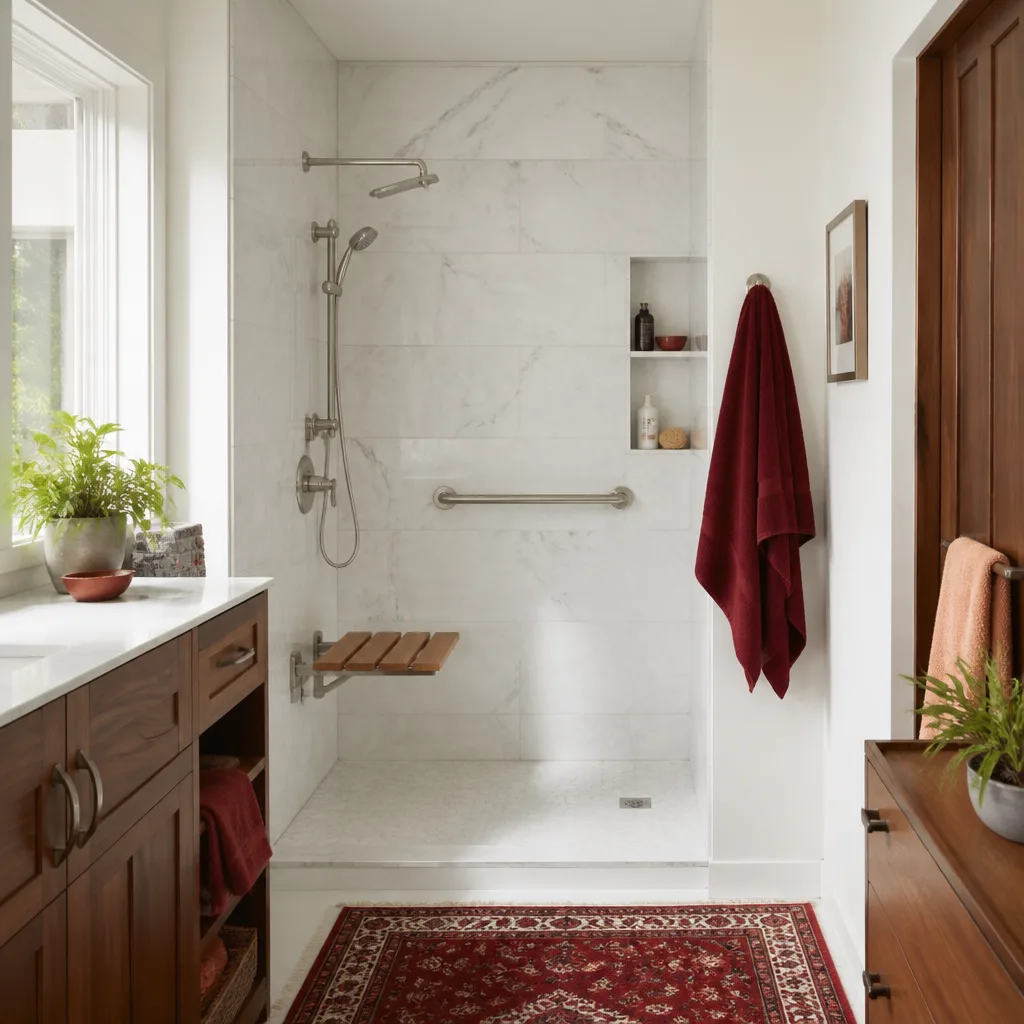
The spread here comes down to what’s behind the walls. A 1960s-era bathroom in Allandale or Brentwood often has cast-iron drain lines that need replacement, galvanized supply lines, and framing that’s not square. The visible materials (tile, vanity, fixtures) are predictable; the hidden plumbing is not. Budget $12,000 – $18,000 for a straightforward conversion in a newer home, and $18,000 – $28,000 when the drain lines and supply plumbing need full replacement. For a fuller breakdown, see our Bathroom Remodeling in Austin guide.
ADUs (Accessory Dwelling Units)
Austin’s ADU rules changed in 2023, loosening restrictions on lot coverage and parking. That triggered a wave of ADU inquiries, but the costs are still catching homeowners off guard. A 600 – 800 square foot ADU in Austin now runs $200,000 – $320,000 all-in, including site work, utility connections, and a separate meter. The variable is utility connection: tapping into the existing sewer line can cost $8,000 – $15,000 if the line is accessible, or $25,000+ if you’re on the wrong side of the lot. That one line item can swing the project by 10%.
The pattern across all three: the visible scope is predictable. The site conditions, the hidden infrastructure, and the permit timeline are what move the number. A contractor who gives you a price without asking about your drain lines, your soil, and your inspection history is guessing.
Sample Budgets by Project Type: What $50,000 Buys in 2026
Let’s put real numbers on the table. Here are three line-item budgets based on current Austin pricing, the kind of detail we give homeowners in a written estimate.
Mid-Range Kitchen Remodel: $45,000 – $52,000
- Demolition and disposal: $2,200 – $3,500
- Electrical rough-in and fixtures: $5,500 – $8,500
- Plumbing rough-in (dishwasher, sink, pot filler): $3,500 – $6,000
- Cabinetry (semi-custom, Wellborn or equivalent): $14,000 – $19,000
- Countertops (Silestone or Cambria quartz, 50 – 60 sq ft): $6,000 – $9,000
- Tile backsplash and flooring: $3,500 – $6,500
- Appliances (mid-tier, installed): $8,000 – $12,000
- Permits and inspections: $1,800 – $2,800
- Project management and general conditions: $6,000 – $9,000
Primary Bathroom Remodel: $28,000 – $36,000
- Demolition and disposal: $1,800 – $2,800
- Plumbing rough-in and valve relocation: $4,000 – $7,000
- Electrical (GFCI outlets, lighting, exhaust fan): $2,500 – $4,000
- Shower pan, waterproofing, and cement board substrate: $3,500 – $5,500
- Tile (shower walls, floor, up to 100 sq ft): $6,000 – $10,000
- Vanity, countertop, and sink: $3,500 – $6,500
- Fixtures (showerhead, faucet, toilet): $2,000 – $4,000
- Permits and inspections: $1,200 – $2,200
Whole-Home Interior Remodel (1,800 sq ft, 3 bed / 2 bath): $85,000 – $135,000
- Flooring throughout (LVP or engineered hardwood): $14,000 – $22,000
- Full kitchen (as above, plus layout changes): $50,000 – $68,000
- Two bathrooms (full gut): $45,000 – $72,000
- Paint, trim, doors, and hardware: $12,000 – $18,000
- Electrical panel upgrade (if needed): $3,500 – $6,000
- Permits and inspections: $4,000 – $7,000
- Project management: $15,000 – $25,000
These numbers reflect mid-range material selections, not builder-grade and not luxury. The cabinets are Wellborn or equivalent. The counters are Silestone, Cambria, or Caesarstone. The fixtures are mid-range, not plumbing-showroom exotica. For those looking at a kitchen specifically, our Kitchen Remodeling in Austin guide goes deeper on line items.
Common Mistakes to Avoid
- Accepting a verbal estimate as a price. A verbal number is not a contract. If a contractor will not put the price in writing before work starts, you do not actually have a price. Insist on a written, fixed number.
- Budgeting the national average for materials. Austin lumber, large-format tile, and energy-code-compliant windows still run 5 – 12% above national guides. Add that margin before you set your ceiling.
- Ignoring the permit timeline for your specific project. A kitchen remodel in an older inner-city home takes longer to permit and inspect than the same job in a newer suburb like Leander or Pflugerville, where codes are newer and inspections are less loaded.
- Choosing a bid based on the lowest number. A bid that’s 20% below the others is not a bargain; it’s a contractor who plans to recover on change orders. Ask why the number is lower. Listen for what’s missing.
- Overlooking the plumbing and electrical rough-in on older homes. In neighborhoods like Crestview, Allandale, and Travis Heights, the hidden infrastructure often costs more than the visible finishes. Budget for it.
- Paying 100% up front. A legitimate Austin contractor asks for a deposit (typically 10 – 30%), then progress payments tied to milestones. A contractor who wants 50% or more before demo day is a red flag.
- Forgetting carrying costs if you move out. Rent in Austin averages $1,850/month. A 14-week project that runs 18 weeks costs you an extra month of rent. That’s real money, and it should be in your budget.
When to Call a Professional
Some projects are genuinely DIY-able: painting, trim replacement, fixture swaps. This guide is not about those. If the job involves moving plumbing, touching electrical, opening walls, or changing the footprint of your home, you’re into permit territory, and that’s where a licensed Austin contractor earns their fee. The specific scenarios that justify a professional: any work behind walls (you don’t know what’s back there until it’s open), any electrical work beyond swapping a fixture, any plumbing beyond replacing a faucet, and any job with structural or waterproofing implications. Getting these wrong costs more to fix than paying for them the first time. Penhallow Remodeling Austin offers free written estimates on kitchen remodels, bathroom remodels, and whole-home work throughout Austin. Call (325) 225-5429 and we’ll walk the project with you, line by line.
Frequently Asked Questions
A mid-range kitchen remodel in Austin runs $45,000 – $52,000 including cabinets, countertops, appliances, flooring, permits, and labor. The two largest variables are cabinet line and whether the existing plumbing and electrical need full rough-in replacement, which is common in homes built before 1990. Call (325) 225-5429 for an exact written quote on your kitchen.
Mid-range remodel work in Austin runs $185 – $275 per square foot, with additions running higher at $250 – $450 per square foot due to foundation and site costs. The square foot number is useful for rough planning but misleading for line-item budgeting, because bathrooms and kitchens concentrate high-cost trades into small areas.
A $75,000 remodel in Austin typically carries $1,800 – $2,800 in permit fees, while a $200,000 addition runs $4,500 – $7,000. These fees are based on project valuation and are non-negotiable. They should appear as a line item on any legitimate written estimate.
On a fixed-price contract, no. The written number you agree to is the number on the invoice, unless you request a change to the scope. On a time-and-materials contract, yes, the price moves with every labor hour and every material invoice. This is why we insist on a written, fixed price before any work begins.
A kitchen remodel typically takes 8 – 12 weeks from demo to final inspection. A primary bathroom runs 5 – 8 weeks. A whole-home remodel runs 4 – 8 months. Austin’s inspection scheduling adds 2 – 5 business days per inspection, and a full remodel requires 8 – 14 inspections, so plan for the calendar, not just the construction.
Yes. Any legitimate Austin contractor pulls permits for work that requires them, and the permit fees are itemized on your written estimate. A contractor who suggests skipping permits is asking you to carry the legal and resale risk on your own home.
It’s a written guarantee that covers every Penhallow Remodeling project: if the work fails inside the guarantee period, we come back and fix it at no charge. That includes a free return visit, no service call, no re-inspection fee. It’s written on every project, not spoken as a marketing line.
The Bottom Line

Austin construction costs in 2026 are shaped by three forces national guides miss: skilled trade labor that stayed high after the boom, material categories that still carry 5 – 12% premiums on key items, and a permit and inspection cycle that adds real time and real money to every job over $50,000. The fix is not to find a cheaper contractor; it’s to insist on line-item transparency, a written fixed price, and a written guarantee. Get the number in writing. Know what moves it. Plan for the hidden lines. The details are where the budget lives.
Written by Trevor Nash, Owner at Penhallow Remodeling Austin, serving Austin since 2004.
See the difference
 Before
 After
After Before
 After
After Before
 After
After

